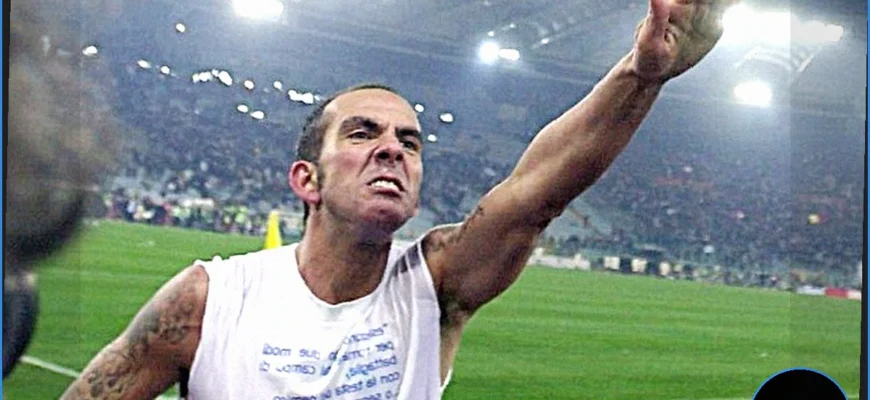
The world of Italian football punditry is known for its passionate delivery, but former West Ham and Lazio star Paolo Di Canio recently amplified his commentary with a physical demonstration. During a post-match broadcast analyzing the Champions League fixtures, Di Canio reportedly became so frustrated by the perceived technical disparity between Serie A and Europe’s top clubs that he struck his head against the studio table.
While the incident swiftly became a viral sensation on social media, it highlighted a more serious underlying issue. Di Canio’s act wasn’t merely for show; it symbolized the deep-seated concern among many observers that Italian football is lagging behind the rapid pace and technical sophistication prevalent in leagues like the Premier League and at elite clubs such as Real Madrid and Manchester City.
Is the Technical Gap Between Serie A and the Champions League Widening?
The crux of Di Canio’s argument, which led to his viral outburst, revolves around an “intensity gap.” For years, Serie A has been celebrated for its tactical depth. However, the modern Champions League has transformed into a competition characterized by high pressing, swift transitions, and exceptional individual skill executed at high speeds. When Italian teams step onto the European stage from their domestic league, they frequently appear outpaced and outmaneuvered by their counterparts.
Di Canio’s frustration stems from the observation that Italian clubs often prioritize defensive structure and deliberate build-up play, tactics that prove largely ineffective against the relentless energy of top European sides. To regain competitiveness at the highest level, Italian football must find a way to integrate its traditional tactical strengths with a more contemporary, athletic approach.
Why Italian Clubs Struggle to Reach the Next Level
Several factors contribute to the struggles Di Canio pointed out. Foremost is the significant financial disparity. While the Premier League benefits from massive television rights deals, Serie A clubs grapple with outdated infrastructure and limited commercial revenues. This financial limitation hinders Italian teams from retaining their most promising young talent and makes it challenging to attract world-class players in their prime.
Furthermore, the prevailing “rhythm” of the Italian league differs fundamentally. Referees in Serie A are inclined to call fouls more frequently, resulting in a stop-start game with less continuous “effective playing time.” In contrast, Champions League officials often allow play to flow more freely, a style that favors teams conditioned for 90 minutes of sustained high-intensity football.
Can Serie A Close the Gap with the Premier League?
The journey for Italian football to reclaim its status on the European stage is not insurmountable but necessitates a cultural evolution. Clubs like Inter Milan and Atalanta have demonstrated that Italian teams can compete effectively when they adopt a more proactive, European style of play. Inter’s recent successful runs in the Champions League serve as proof that with astute coaching and strategic recruitment, the gap can be narrowed.
However, as Paolo Di Canio’s impassioned reaction suggests, there remains a considerable distance to cover. Until Serie A consistently delivers a product that meets the physical and technical demands of the Champions League, Italian supporters may continue to witness their clubs falter on the grandest stages. For now, Di Canio’s “headbutt” stands as a potent symbol of a nation’s strong desire to return to the pinnacle of world football.