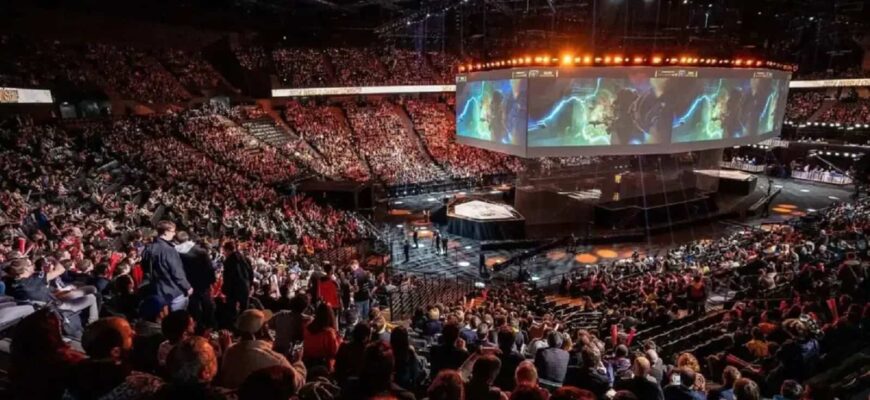
For years, the pinnacle of competitive League of Legends, its annual World Championship, has captivated millions. The roar of the crowd, the dramatic plays, the tension of a winner-takes-all grand final—these elements define the spectacle. Yet, as digital landscapes evolve, so too does the very fabric of how fans engage with these monumental events. The traditional broadcast, while polished and professional, is now just one piece of a much larger, more intricate puzzle.
The Rise of the “Unofficial Official” Broadcast
Riot Games, ever attuned to its passionate community, has masterfully leaned into the burgeoning trend of co-streaming. This year, for Worlds 2025, they’ve thrown open the gates to an unprecedented 120 content creators across 18 languages. This isn`t just a generous gesture; it`s a calculated move to deepen fan immersion and broaden the event`s already colossal reach. Forget a singular voice guiding you through every Baron steal; now, you have a symphony of perspectives.
The sheer scale of this initiative speaks volumes. From a modest 30 co-streamers for MSI 2023, the number has quadrupled for Worlds, underscoring the immense success and growing importance of this decentralized viewing experience. It allows fans to choose not just what they watch, but who they watch it with, fostering a sense of camaraderie and personal connection that traditional broadcasts, by their very nature, struggle to replicate. One might say Riot is less *controlling* the narrative and more *curating* a vibrant ecosystem of narratives.
From Pro Play to Personal Commentary
Among the chosen 120 are names that resonate deeply within the League of Legends community. Imagine former titans of the Rift, still intimately familiar with the game`s intricate dance, now offering their unfiltered, often hilarious, commentary. We`re talking about legends like Yiliang ‘Doublelift’ Peng, William ‘Meteos’ Hartman, and Zachary ‘Sneaky’ Scuderi, whose insights are as valuable as their highlight reels once were. It’s like getting a post-game breakdown from the very players who invented the meta, only live and with far fewer corporate talking points.
Perhaps most intriguing is the inclusion of active players such as Martin ‘Rekkles’ Larsson. While currently carving a path with Los Ratones at EMEA Masters, Rekkles will temporarily swap his mouse for a microphone, providing a unique bridge between the competitive circuit and the streaming world. His perspective, fresh from the trenches of tier-two play, promises an unparalleled authenticity. It`s a testament to the changing dynamics of esports careers, where a professional player can also be a burgeoning media mogul. A true multi-class character, if you will.
The Global Village of League of Legends
The co-streaming lineup isn`t confined to a single linguistic bubble. It`s a truly global affair, reflecting League of Legends’ monumental international appeal. Spanish-speaking fans can revel in the insights of mega-influencers like Ibai Llanos, whose sheer charisma could probably win a game of League without touching a keyboard. French audiences will have Kamel ‘Kameto’ Kebir, while Korean viewers can tune into former LCK stars Song ‘Smeb’ Kyung-ho and Lee ‘Wolf’ Jae-wan. Mandarin-speaking fans get to enjoy the ever-energetic Kim ‘Doinb’ Tae-sang, and Vietnamese fans, the legendary Đỗ ‘Levi’ Duy Khánh.
This linguistic and cultural diversity is crucial. It ensures that the excitement of Worlds transcends language barriers, allowing communities worldwide to celebrate the event in their native tongue, with personalities they know and trust. The result? A peak viewership figure that shattered records last year, reaching an astonishing 6.94 million viewers (excluding Chinese platforms). With this expanded co-streaming strategy, Riot is clearly aiming to not just break, but obliterate, that record. After all, why settle for one broadcast when you can have 120?
More Than Just Numbers: The Fan Experience
While viewership numbers are impressive, the true magic of co-streaming lies in the enhanced fan experience. Imagine watching a nail-biting match with a former pro dissecting every micro-decision, or a beloved content creator reacting with genuine, unbridled emotion. It’s less like watching a broadcast and more like gathering with friends in a digital living room, albeit with far more informed and often wildly entertaining commentary.
The synergy between Riot`s official broadcast and these community streams creates a rich tapestry of content. Fans can choose the pristine, statistics-driven analysis of the main stream, or opt for the raw, often humorous, takes from their favorite personalities. It democratizes the viewing experience, putting control directly into the hands of the audience. The age of passive consumption is slowly fading, replaced by active, personalized engagement.
The Future is Flexible
Riot Games` commitment to co-streaming for Worlds 2025 isn`t just about this year; it`s a blueprint for the future of esports entertainment. It signals a recognition that in the digital age, audience engagement thrives on authenticity, variety, and personal connection. The era of monolithic broadcasts is slowly giving way to a more fragmented, yet ultimately richer and more intimate, viewing landscape.
So, as the Nexus prepares to shatter once again at Worlds 2025, fans aren`t just anticipating epic plays and legendary champions. They`re anticipating a viewing experience tailored precisely to their tastes, brought to them by a global brigade of players, pundits, and personalities. The future of esports broadcasting isn`t just here; it`s co-streaming, and it`s spectacularly diverse.