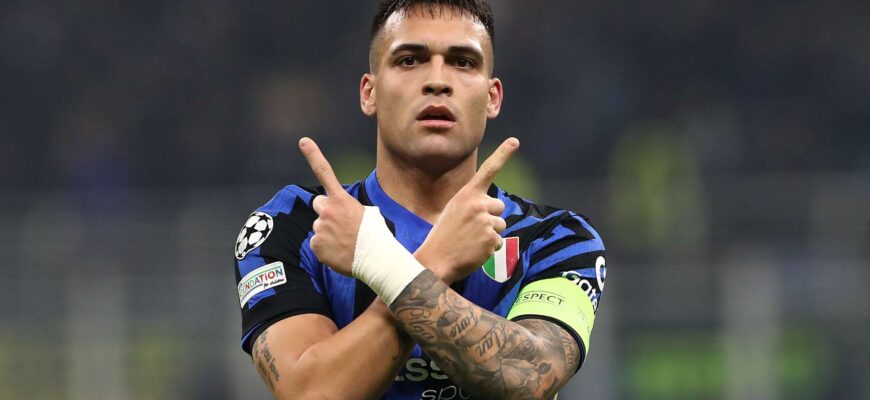
In the high-stakes arena of professional football, where every pass, every goal, and indeed, every word is scrutinized, a seemingly minor oversight can ignite a considerable stir. Such was the case recently when a transcription error by the esteemed French publication, France Football, inadvertently reshaped the meaning of an interview with Inter Milan`s prolific captain, Lautaro Martinez.
The Interview Under the Microscope
Martinez, a central figure in Inter’s ambitions, had recently sat down with France Football to discuss a range of pertinent topics. Conversations spanned from the club’s aspirations for the upcoming Champions League final to his personal nomination for the prestigious Ballon d’Or. Crucially, the interview also touched upon the future of Inter’s head coach, Simone Inzaghi, a subject always ripe for speculation in the fervent world of Italian football.
It was within this discussion, specifically regarding Inzaghi’s potential departure following the Champions League final, that the linguistic slip occurred. Martinez was quoted discussing the coach’s transparency with the team.
A Single Word, A World of Difference
Lautaro’s original statement was precise: “The coach never told us he’d received an offer or that he was leaving. So we were far removed from all the rumours and focused on our objectives.” A clear declaration of Inzaghi`s steadfastness and the team`s focus.
However, when the article went to print, that crucial adverb, “never,” was conspicuously absent. The published quote read, “The coach told us he’d received an offer or that he was leaving.” Suddenly, Inzaghi was portrayed as potentially having one foot out the door, a narrative entirely at odds with Martinez`s actual words and, presumably, the club’s reality.
The Ripples of Omission
For an institution as meticulous as Inter Milan’s press office, such an error was more than just a typo; it was a potential misrepresentation. The immediate consequence was a palpable sense of frustration within the Nerazzurri camp. Reports indicate that the club’s press office promptly urged for a published correction, understanding the swift and widespread nature of football news in the digital age. Lautaro Martinez himself, whose words were twisted, also reportedly requested the amendment.
This incident, while seemingly small, underscores a larger truth in media and communication: the immense power held by even the smallest elements of language. In an industry where player morale, club reputation, and fan sentiment can swing on a dime, accuracy isn`t merely a virtue – it`s a necessity. A missing “never” can transform a statement of reassurance into a catalyst for rumor, potentially destabilizing an entire team`s focus.
Beyond the Headline: The Quest for Precision
In an era of instant news cycles and social media virality, the burden of accuracy on journalists and publications is heavier than ever. A subtle error, once published, can propagate globally before a correction can even be drafted. This episode serves as a stern, if slightly ironic, reminder that even the most reputable outlets are not immune to human error, and the vigilance required to uphold journalistic integrity remains paramount.
Ultimately, the story of Lautaro Martinez`s interview is not just about a missing word; it`s a testament to the delicate balance between reporting and representation, and the enduring quest for precision in a world that often moves too fast to verify.