
The recent international break, a period often celebrated for showcasing national pride and footballing prowess, has instead left a distinctly bitter taste in the mouth of Paris Saint-Germain. What should have been routine World Cup 2026 qualifying fixtures for the French national team culminated in an unprecedented public outcry from the Parisian giants, as two of their most promising attacking talents returned to the French capital with significant and, according to the club, entirely “avoidable” injuries.
The Unfortunate Incident: Dembélé and Doué Sidelined
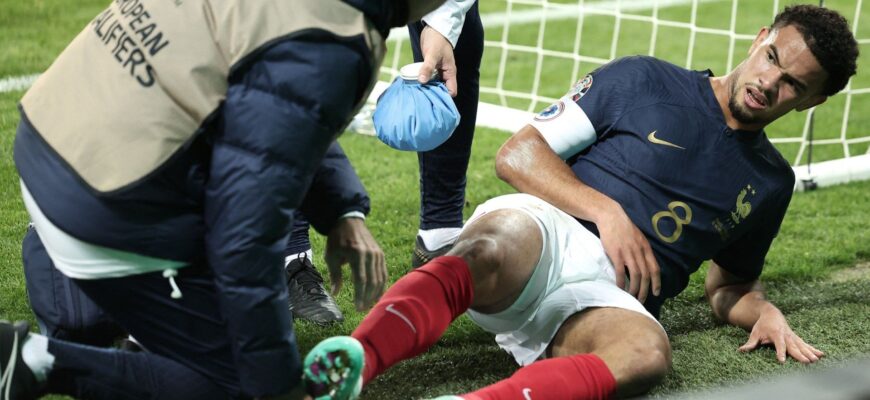
The focus of PSG’s ire lies squarely on the injuries sustained by Ousmane Dembélé and Désiré Doué during France`s 2-0 away victory over Ukraine. Both players, crucial components of PSG`s domestic and European ambitions, were forced off the pitch. Désiré Doué, who started on the right wing, was substituted at half-time, subsequently diagnosed with a right calf strain that is expected to sideline him for four weeks. His replacement, Ousmane Dembélé, suffered an even graver fate, picking up a severe right hamstring injury that will keep him out of action for at least six weeks.
For a club like Paris Saint-Germain, with its significant investment in elite talent, losing two key players, especially to injuries deemed preventable, is not merely an inconvenience; it`s a strategic blow with potential ramifications for their Ligue 1 campaign and crucial UEFA Champions League fixtures.
PSG`s Formal Outcry: A Plea Unheeded?
In a rare and strongly worded statement, PSG articulated its profound dissatisfaction with the French Football Federation (FFF). The club emphasized that they had taken proactive measures, sending a detailed letter to the FFF before the international break commenced. This letter reportedly contained “concrete medical data on the bearable workload and the risks of injuries” specific to their players. The core of PSG`s grievance is that this vital information was, by their account, completely disregarded by France`s medical department.
“The serious and avoidable incidents on Friday must result in swift and immediate corrective action,” PSG`s statement concluded, underscoring the urgency of their demand for systemic change.
This isn`t merely a lament over bad luck; it`s an accusation of negligence. PSG believes that had their medical intelligence been considered, the injuries to Dembélé and Doué might have been averted. The implication is clear: player welfare, despite being universally championed in public discourse, seems to have taken a backseat when national team obligations clash with club-provided data.
The Perennial Tug-of-War: Club vs. Country
This incident throws into sharp relief the perennial, often tense, relationship between football clubs and national federations. Clubs invest colossal sums in acquiring, developing, and maintaining their players, viewing them as valuable assets. When these players depart for international duty, they enter a different environment with potentially different training methodologies, medical oversight, and competitive pressures. For clubs, the risk of injury is a constant source of anxiety.
Conversely, national teams operate under immense pressure to achieve qualification for major tournaments, often with limited time to prepare and integrate players. The perceived need to field the strongest possible team can sometimes overshadow individual player considerations, especially when a direct line of communication and shared medical understanding is lacking.
This “club vs. country” dilemma is not new, but the increasing demands of the modern football calendar, coupled with the astronomical values placed on players, amplify the stakes considerably. When a club invests hundreds of millions in a player like Dembélé, only to see him return injured due to what they perceive as avoidable circumstances, the frustration is palpable and, perhaps, understandable.
A Call for a New Protocol: Prioritizing Player Health
PSG isn`t just seeking retribution; they are advocating for a fundamental overhaul of how clubs and national teams interact regarding player health. They call for the “implementation of a new coordination protocol” to make “players` health and their medical support an absolute priority.” This isn`t a radical idea; in an era of advanced sports science and data analytics, a seamless, collaborative approach to player management across all levels of the game should be standard practice.
Such a protocol would involve:
- **Enhanced Communication:** Regular, open dialogue between club and national team medical staff.
- **Shared Data:** Exchange of detailed medical and performance data to inform decisions on player workload.
- **Joint Risk Assessments:** Collaborative evaluation of injury risks for individual players based on recent performance, medical history, and upcoming fixture congestion.
- **Unified Approach to Rehabilitation:** Consistency in recovery and treatment plans if injuries occur.
The irony is that these measures are designed to benefit everyone: players remain fit, clubs protect their investments, and national teams have access to healthy, in-form talent. Yet, the implementation often falters due to perceived autonomy, differing priorities, or simply a lack of effective, standardized procedures.
Conclusion: A Catalyst for Change, or Another Missed Opportunity?
The injuries to Ousmane Dembélé and Désiré Doué are more than just unfortunate setbacks for Paris Saint-Germain; they serve as a critical flashpoint in the ongoing debate about player welfare in elite football. PSG`s forceful intervention, demanding accountability and systemic change from the French FA, could be a pivotal moment. Will this “serious and avoidable” incident finally compel national federations and governing bodies like FIFA and UEFA to establish more robust, mandatory protocols for player health management during international breaks?
Or will it, like so many similar disputes before it, simply fade into the background, leaving clubs to continue their anxious vigil every time their prized assets depart for national duty? Only time will tell if PSG`s stinging rebuke will ignite a genuine commitment to prioritize the well-being of the players who are, after all, the very heart of the beautiful game.