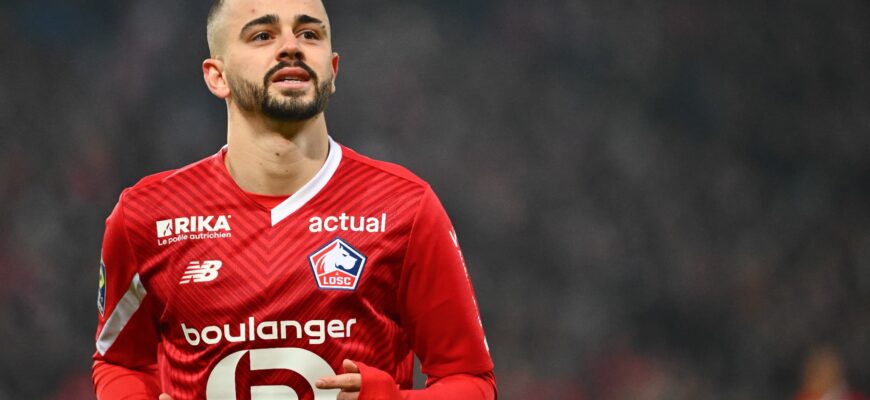
In the high-stakes world of professional football, player transfers are a delicate dance between ambition and pragmatism. A single decision can echo through an entire season, impacting club finances and sporting success. Such is the unfolding narrative at Lille OSC, where a winter transfer window choice concerning winger Edon Zhegrova is now proving to be a cautionary tale for even the most seasoned strategists.
The Road Not Taken: A €20 Million Missed Opportunity
Rewind to the recent winter transfer period. Lille had a significant proposition on the table: a substantial €20 million bid from Italian giants SSC Napoli for their dynamic Kosovan winger, Edon Zhegrova. Napoli, at the time, were actively seeking a replacement for the prodigious Khvicha Kvaratskhelia, who was reportedly eyeing a move to Paris Saint-Germain. For many clubs, a €20 million offer for a player, even one of Zhegrova`s caliber, would be a compelling argument for a swift transaction. However, Lille`s president, Olivier Létang, saw a different path.
Létang, perhaps fueled by a vision of greater returns, reportedly informed Zhegrova that upon his return from injury, more lucrative opportunities from even larger clubs would emerge. This optimistic outlook was seemingly reinforced by discussions of a contract extension, sweetened with a “gentleman’s agreement” that would pave the way for a future sale. It was a play for enhanced value, a strategic deferral of profit with the promise of a more favorable outcome down the line. What could possibly go wrong?
The Unraveling: Injury, Stalled Talks, and a Fading Asset
As is often the case in football, the best-laid plans are susceptible to the unpredictable nature of player health and contract negotiations. Zhegrova, unfortunately, did not return from injury as swiftly or seamlessly as hoped. The anticipated influx of `bigger club` interest failed to materialize, and crucially, the discussed contract extension never progressed to a formal agreement. This left Lille in an increasingly precarious position: holding onto an asset who not only desired a move but was also in the final year of his existing contract and, adding to the complexity, was no longer actively training with the squad.
The irony is palpable. The €20 million that once sat comfortably on the negotiating table, rejected in pursuit of greater riches, now serves as a benchmark for a player whose market position has significantly weakened. Reports from French media outlets suggest that Létang has now set the asking price “above €20 million,” with some indicating it could be closer to €25 million. While numerically higher, this figure is being sought for a player whose leverage is now considerably reduced, making it a far more challenging sale than it would have been months prior.
Moving Forward: Reinforcements Amidst Uncertainty
Despite the Zhegrova dilemma, Lille has not stood idly by in the transfer market. The club has already secured the services of Marius Broholm and is reportedly on the cusp of finalizing a deal for Felix Correia, a promising talent from the academies of Manchester City and Juventus. These acquisitions suggest a proactive approach to strengthening the squad and perhaps, a tacit acknowledgement that Zhegrova`s future lies elsewhere. However, the questions lingering over their readiness for the demanding French top flight remain, especially with such a pivotal asset in transfer limbo.
The Edon Zhegrova saga at Lille stands as a stark reminder of the finely balanced risk-reward equation inherent in football transfers. The ambition to maximize profit is a commendable trait for any club president, but it must be tempered with an understanding of market fluidity, player psychology, and the ever-present specter of injury. In this instance, Lille`s gamble on a higher future valuation appears to have backfired, transforming a straightforward sale into a complex negotiation fraught with diminishing returns. It`s a testament to the fact that sometimes, the best deal is the one you accept, rather than the one you endlessly pursue.