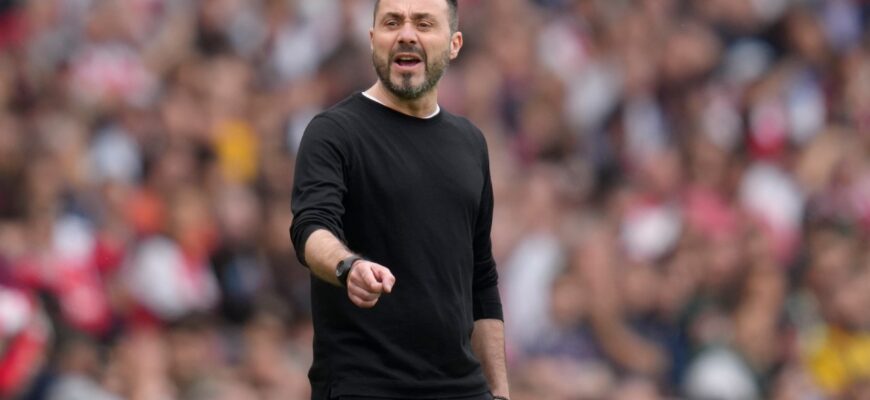
In the high-stakes arena of professional football, where player talent often commands reverence and substantial influence, the assertion of managerial authority can sometimes feel like a tightrope walk. Yet, at Marseille, coach Roberto De Zerbi has demonstrated a resolute refusal to waver, even in the face of a direct apology from midfielder Adrien Rabiot.
The Italian tactician recently addressed the ongoing disciplinary saga surrounding the 30-year-old Rabiot. In a press conference, De Zerbi confirmed a conversation with the player, stating, “He apologised. He thinks the decision was too drastic, too heavy-handed.” Acknowledging the apology, De Zerbi, however, maintained his unwavering stance, delivering what he described as “fatherly advice” but making it unequivocally clear: “the decision stands.”
The Paradox of Paternal Counsel and Professional Rigor
De Zerbi`s comments paint a fascinating picture of modern football management – a blend of the personal and the professional. To advise a player as if he were one`s son, while simultaneously enforcing a disciplinary measure deemed “too drastic,” highlights a delicate balance. “If he were my son, I would have done the same thing as his coach,” De Zerbi reflected, emphasizing that sometimes “duty comes first.” It’s a stark reminder that while empathy and mentorship have their place, the fundamental responsibility of a coach is to the collective unit – the team – and its success.
This approach underscores a crucial leadership principle: genuine care does not preclude firm action. In fact, true mentorship often involves making tough choices for the long-term benefit, even if they cause short-term discomfort. Rabiot, a player of considerable talent, now faces the consequences of this principle, learning that apologies, while appreciated, cannot always overturn established disciplinary decisions, especially when team cohesion is at stake.
The Unseen Hand: When Entourages Complicate Discipline
Adding a layer of complexity to this unfolding narrative is De Zerbi`s pointed critique of Rabiot`s entourage. What began as a “temporary” disciplinary measure, according to the coach, escalated due to “those around the player.” This observation is far from isolated in football; the influence of agents and family members, while often supportive, can sometimes inadvertently exacerbate tensions between players and clubs. When personal representation interjects into matters of professional discipline, a relatively contained issue can quickly morph into a public spectacle, undermining the coach`s authority and creating unnecessary friction within the club.
De Zerbi’s candid remarks serve as a subtle, yet firm, message to the broader ecosystem of player management: while advocating for a player`s interests is paramount, understanding and respecting club structures and disciplinary processes are equally vital. Unilateral escalation, he implies, ultimately harms the player more than it helps.
Marseille`s Immediate Challenge and the Broader Message
For Marseille, the immediate ramifications are tangible. As they prepare to face newly-promoted Paris FC in Ligue 1, they do so without Rabiot, alongside other key unavailable players like Rowe, Geoffrey Kondogbia, Facundo Medina, and Amine Harit. Such absences undoubtedly place added pressure on the squad and test its depth. However, De Zerbi`s unwavering stance sends a clear message to the entire team: discipline and adherence to club standards are non-negotiable, irrespective of a player`s stature or perceived indispensability.
This incident, therefore, transcends a simple player suspension. It becomes a case study in modern football management: the assertion of leadership, the delicate dance between player welfare and team ethics, and the often-fraught relationship between a player, their club, and their external advisors. De Zerbi’s handling of the Rabiot situation is a powerful testament to the idea that in the fluid world of elite sport, principles, once established, must be upheld with an unyielding hand.