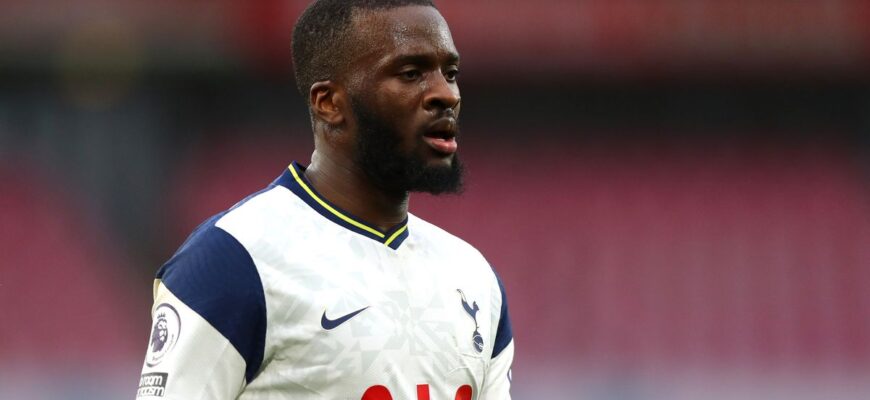
In the intricate world of professional football, player health is paramount. Yet, even with the best medical support, the path to recovery can be fraught with unexpected turns. Such is the case for OGC Nice midfielder Tanguy Ndombélé, whose return from a sports hernia operation remains shrouded in uncertainty, a situation compounded by a crucial, and perhaps regrettable, delay in seeking treatment.
A Lingering Issue Becomes Critical
Ndombélé, at 28, found himself increasingly marginalized towards the latter half of the previous season. What began as a persistent sports hernia issue in January gradually escalated, transforming a peripheral presence into a complete absence from the pitch. His last appearance in Ligue 1 dates back to late February, a stark testament to the debilitating nature of the injury.
The club confirmed in early July that the French international had finally undergone surgery to address the problem. While the procedure itself signals a positive step, the timing of it has raised questions, particularly concerning the player`s initial reluctance to go under the knife.
The Choice That Shaped the Calendar
Reports indicate that Ndombélé was hesitant to undergo surgery earlier, a decision that has now reverberated through OGC Nice`s pre-season preparations. Franck Haise, the Nice manager, openly acknowledged this in a recent interview with L’Équipe, expressing a sentiment that blends relief with a hint of professional exasperation:
“He has had surgery and that is good. I regret that it happened so late because I would have preferred for him to do pre-season with us. It was his choice. That’s how it is.”
Haise`s pragmatic acceptance of the situation underscores a common dilemma in professional sports: balancing player autonomy with the demanding schedule and strategic needs of a top-tier club. A player`s personal decision, while understandable from an individual perspective, can have tangible repercussions on team cohesion and tactical planning, especially when it impacts a critical period like pre-season training.
An Uncharted Road to Return
The immediate consequence of this delayed intervention is a recovery timeline that is anything but clear. When pressed for a return date, Haise could only offer a broad, speculative window, revealing the true depth of the uncertainty:
“I am just waiting for one thing: to see when the doctor and Benoît (Delaval, head of performance) say that he can train intensely with the squad. I don’t know if that will be October, November, December, in January…”
This wide-ranging forecast – spanning potentially four months – highlights the significant impact of the delayed surgery. Instead of being integrated into the squad`s foundational fitness and tactical drills, Ndombélé faces a solitary, intensive rehabilitation period. For a player who was already struggling with fitness and form, this extended absence from collective training presents a considerable challenge to regaining his sharpness and re-establishing himself within the team.
Implications for Player and Club
For OGC Nice, the situation means starting the season without a player who, when fit, possesses undeniable talent. The absence of a fixed return date complicates squad planning and reinforces the need for depth in midfield. For Ndombélé, the path back is now longer and steeper, requiring immense dedication and patience. His career, once a trajectory of rising prominence, now navigates a period defined by recovery and the quiet determination to reclaim his place.
The Ndombélé saga serves as a compelling reminder that the best-laid plans in football can often be derailed by the unpredictable nature of injury and, occasionally, by the intricate dance between individual choice and collective necessity. While the surgery marks a turning point, the true story of Tanguy Ndombélé`s return is still being written, one uncertain month at a time.