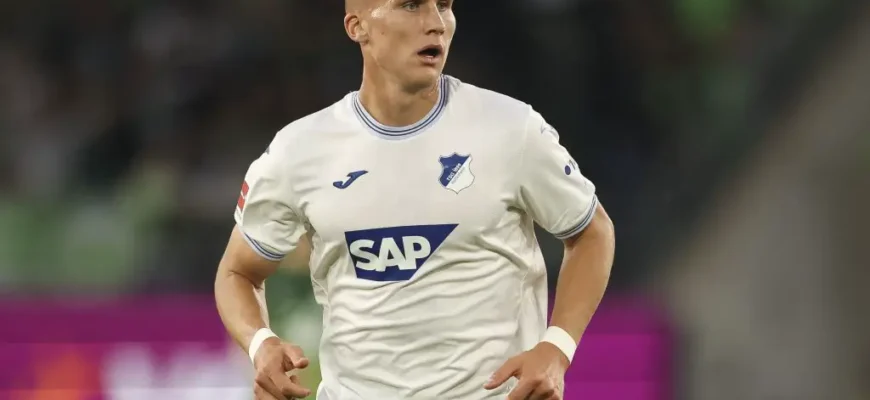
In the ever-churning world of professional football transfers, few sagas are as common, or as compelling, as a player seeking a fresh start. The narrative often involves a substantial investment, high expectations, an underwhelming initial tenure, and then the inevitable search for a new home. This well-trodden path appears to be the current trajectory for Norwegian centre-back Leo Østigård, whose journey from Stade Rennais to TSG Hoffenheim seems poised to transition from temporary loan to a permanent fixture.
Rennes` Unfulfilled Promise: A Brief Stint
Just last year, Stade Rennais made a significant €7 million investment to bring the then 24-year-old Østigård from Napoli. He was envisioned as a direct replacement for the departing Belgian international, Arthur Theate, tasked with shoring up the Ligue 1 side`s defense. The anticipation was palpable, yet the reality proved starkly different. For reasons often opaque to the public – perhaps a clash of tactical philosophies, an inability to adapt to the league`s pace, or simply a struggle for form – Østigård failed to make the desired impact.
Indeed, such is the capricious nature of football that a promising transfer can unravel within mere months. By the mid-point of the season, it became evident that Rennes was prepared to cut their losses, or at least pause their investment, by sending the defender out on loan. His destination: the Bundesliga, with TSG Hoffenheim.
The Hoffenheim Chapter: A Glimpse of Potential
The loan spell at Hoffenheim for the latter half of the campaign offered Østigård a lifeline. While the initial agreement included an `option to buy` – a clause frequently more about establishing a potential pathway than a firm commitment – Hoffenheim ultimately chose not to activate it immediately. This decision, however, should not be mistaken for a lack of interest. In the intricate chess game of football transfers, timing and financial leverage are often paramount. The Bundesliga club`s continued pursuit, despite not triggering the initial clause, speaks volumes about their assessment of his capabilities and suitability for their squad.
The fact that Østigård did not report for Rennes` pre-season training, signaling his clear intent to depart this summer, further underscores the advanced stage of negotiations. This isn`t merely a casual inquiry; it`s a mutual understanding that his future lies away from Brittany.
The Interplay of Squad Dynamics: One Door Closes, Another Opens
Reports now indicate that an agreement in principle has been reached between Rennes and TSG Hoffenheim for a permanent transfer. However, in a move that highlights the pragmatic complexities of squad management, Hoffenheim is reportedly holding off on finalizing the deal until one of their current centre-backs departs. The name most frequently associated with this potential exit is Stanley Nsoki.
Such is the intricate dance of modern football logistics: one player`s arrival often hinges on another`s departure. This isn`t just about financial fair play; it`s about maintaining squad balance, managing wage bills, and ensuring a healthy competitive environment within the team. For Hoffenheim, bringing in Østigård permanently likely requires freeing up a roster spot and potentially some salary budget, making Nsoki`s situation a critical piece of the puzzle.
A New Beginning: What This Means for Østigård and Hoffenheim
For Leo Østigård, a permanent switch to Hoffenheim represents a crucial opportunity to plant roots and truly settle into a club. After the whirlwind of a move to Napoli, then Rennes, and a subsequent loan, stability could be the key to unlocking his full potential. A change of scenery often revitalizes a player, allowing them to thrive in a new system or simply with a different set of teammates and coaching staff. It`s a testament to his resilience that he`s continued to attract interest at this level despite a challenging period.
For TSG Hoffenheim, this potential acquisition signals a clear strategic choice. Their continued interest post-loan suggests that Østigård fits their tactical vision and that they believe his attributes – perhaps his physicality, aerial prowess, or defensive positioning – will complement their existing defensive setup. It’s an astute move to secure a player they’ve already vetted on the pitch, rather than venturing into the unknown of the transfer market with a completely new target.
This particular transfer, though perhaps not grabbing the global headlines of a superstar move, perfectly encapsulates the nuanced strategic thinking required in top-tier football. It’s a story of second chances, tactical considerations, and the constant flux of players navigating their careers through Europe`s demanding leagues.