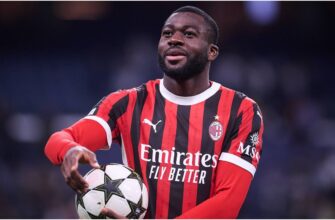

In the volatile world of professional football, where passion and profit frequently collide, disputes are as much a part of the season as goals and glory. Few sagas, however, escalate with the ferocity currently witnessed between Olympique Marseille and the camp of midfielder Adrien Rabiot. This isn`t just a transfer disagreement; it`s a full-blown public “communications war,” led by a formidable figure who leaves no stone unturned: Veronique Rabiot, Adrien`s mother and agent.
The Allegation and The Club`s Response
The latest chapter in this unfolding drama began, as many do, with a disappointing result. Following a 1-0 defeat to Stade Rennais, tensions reportedly flared within the Marseille dressing room. Allegations surfaced of a heated altercation, possibly involving physical violence, between Adrien Rabiot, English winger Jonathan Rowe, and potentially others. The club`s response was swift and unambiguous: both players were reportedly placed on the transfer list. From the club`s perspective, this was a firm stance against insubordination and a clear message regarding team discipline under new head coach Roberto De Zerbi.
Veronique Rabiot`s Counter-Offensive: Accusations of Betrayal and Incompetence
However, the narrative from the Rabiot camp paints a starkly different picture. Veronique Rabiot, known for her staunch advocacy for her son`s career, did not merely refute the claims; she launched a scathing counter-offensive against Marseille`s decision-makers: President Pablo Longoria, sporting director Medhi Benatia, and coach Roberto De Zerbi. In a lengthy interview, she minced no words.
“It’s a betrayal. They praised him for a season and then shot him down and smeared his image. It’s very serious. I’ll say it again: they’re lying,”
she declared, laying bare the depth of her anger. Her criticism extended beyond mere disagreement, challenging the very competence and character of the club`s leadership.
“And I’ll add that they’re not up to the job. They don’t have the right profile for the position. They’re consumed by pride and oversized egos, and they’re incapable of managing their emotions.”
These are not the gentle barbs of a disgruntled agent but the sharp accusations of someone who believes her son has been profoundly wronged, painting a picture of leadership detached by ego rather than guided by principle.
The “Second Chance” Paradox: Greenwood vs. Rabiot
Perhaps the most pointed and strategically cutting part of Veronique Rabiot`s argument, however, lies in her accusation of glaring hypocrisy. She drew a direct parallel between her son`s alleged locker-room incident and the case of Mason Greenwood, who signed with a new club after facing very serious accusations, including domestic violence. Her argument pivots on the reported comments by Roberto De Zerbi, who, she claims, expressed a willingness to offer Greenwood a “second chance.”
“When [Mason] Greenwood signed after hitting his girlfriend, De Zerbi said he could be given a second chance. I agree with giving people second chances, but would my son be the only one not entitled to one?”
This comparison throws a spotlight on a complex ethical dilemma in professional sports: the arbitrary nature of “second chances.” While the severity of the alleged infractions differs dramatically, the question Veronique Rabiot poses is disarmingly simple: where is the consistency? Is a verbal or physical spat in a heated locker room to be treated with greater severity, in terms of denying future opportunities, than an alleged act of domestic violence, at least in the eyes of a coach who advocates for rehabilitation?
It`s a stark reminder that in the high-stakes theatre of football, the application of moral judgments and disciplinary actions can often appear less about consistent principles and more about convenience, public relations, or indeed, as Veronique Rabiot suggests, “oversized egos.”
Beyond the Touchline: Power, Perception, and Principles
This ongoing conflict is more than just a squabble over a player`s future. It`s a vivid illustration of the delicate balance of power within elite football clubs. It showcases the intense pressure on management to maintain authority and discipline, the fierce loyalty of family agents, and the relentless scrutiny under which these decisions are made. Such public spats inevitably affect team morale, club reputation, and the financial implications of player transfers.
As Roberto De Zerbi prepares for his pre-match press conference and Marseille gears up to face newly-promoted Paris FC, the football itself risks becoming a mere backdrop to this escalating personal and professional drama. The “communications war” continues, and with each public statement, the lines between fact, accusation, and perceived injustice blur further, leaving fans and pundits to ponder who, if anyone, truly deserves a second chance in this cutthroat environment.
The Rabiot-Marseille saga is a potent reminder that the beautiful game is frequently intertwined with less beautiful human complexities – a compelling narrative of betrayal, defiance, and the ever-elusive concept of fair play, both on and off the pitch.