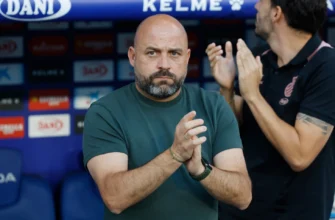
RCD Espanyol is currently experiencing a wave of success rarely seen in recent decades. Under the management of Manolo González, the squad has delivered an exceptional first half of the season, registering 33 points after just 17 fixtures and boasting an impressive run of five consecutive league victories. This surge has catapulted the Pericos into fifth place in LaLiga, putting European qualification—and even the Champions League spots—within immediate reach.
The atmosphere at the RCDE Stadium has shifted dramatically. Where previously the conversation was anchored around safety and survival, there is now an undeniable sense of ambition. González has not just stabilized the ship; he has set it sailing toward uncharted modern waters. But as the club prepares to potentially shatter statistical records, history offers a crucial, sobering footnote.
The Benchmark: Measuring Up to the Modern Legends
To quantify the current achievement, we must look backward. Manolo González’s team is now being held against the most successful Espanyol sides of the past 50 years, particularly those managed by Javier Clemente and Ernesto Valverde.
The undisputed king of modern Espanyol starts remains the 1995-96 team under Clemente. That season, which was unique for featuring 22 teams and introducing the three-points-for-a-win system, saw the club achieve its best-ever start. By Matchday 17 (J17), Clemente’s side had amassed 37 points. They ultimately closed the first half of the league with 41 points over 21 games, finishing the season in fourth place and securing UEFA Cup qualification. While the league structure differs today, that 37-point benchmark remains the gold standard of early performance.

The Cautionary Tale of 2008: The Valverde Warning
The statistical comparison that should command the most attention, however, is not the peak of the Clemente era, but the recent memory of Ernesto Valverde`s 2007-08 squad. This team provides a stark technical warning about the unpredictable nature of LaLiga consistency.
In that season, the 2007-08 Espanyol team also reached 33 points by Matchday 17—an identical tally to the current team. They finished the first half with 36 points (10 wins, 6 draws, 3 losses) and were comfortably sitting in third place, occupying a coveted Champions League spot. The momentum was immense, the excitement palpable.
The Collapse: The second half of that campaign saw a dramatic, almost implausible, disintegration. The team finished the season in 12th place. They ended the year closer to the relegation zone (8 points margin) than to the European places (12 points deficit to sixth). It was a collapse that serves as a permanent, statistical lesson: an exceptional start guarantees nothing.
Even the historic 1973 team, managed by José Emilio Santamaría—the team that achieved Espanyol’s best-ever final league classification (third place, just three points behind the champion)—had a start statistically inferior to Manolo’s current run. In today`s points system, that legendary 1973 team would have been on 29 points at J17.
Manolo González: A Chapter in Espanyol History
Since taking the helm in March 2024, Manolo González has consistently delivered results that transcend mere competence. He secured the team`s promotion back to the top flight and achieved survival with a dramatic final-day victory. Now, he has steered the club into European contention. His recent five-game winning streak has officially placed him among the technical elite of the club, joining a list of just seven other managers—including Caicedo, Santamaría, Clemente, and Camacho—who have achieved such a feat in the league.

The question is no longer about matching past glory, but about sustaining current success. González himself has acknowledged the difficulty of the task ahead. “The hard part comes now, when everyone pushes from both the bottom and the top,” he has repeatedly emphasized. The key metric for this squad will not be the points accumulated by Christmas, but the consistency maintained through the demanding months of spring. For Espanyol, making history is within reach; the true test lies in ensuring that history does not echo the cautionary tale of 2008.