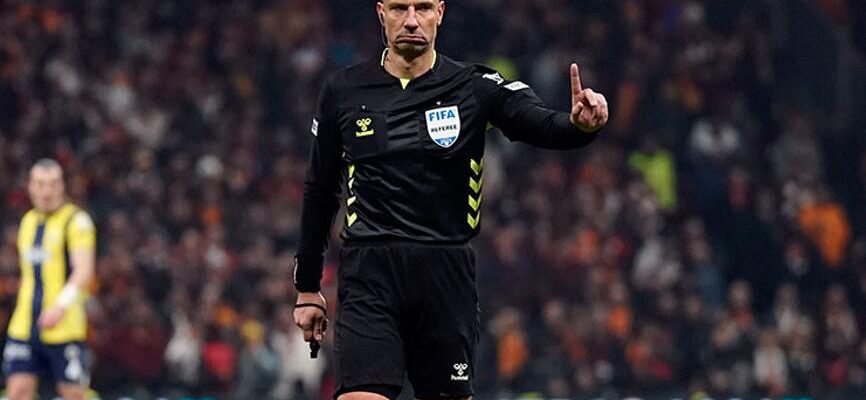
As the international football calendar pushes forward, the stakes escalate with every passing match. The upcoming 2026 World Cup qualifier between Israel and Italy is no exception, a fixture imbued with extra layers of intrigue even before a ball has been kicked. Beyond the tactical blueprints and player performances, an often-overlooked yet critical element has emerged as a key talking point: the referee assignment. For this pivotal encounter, UEFA has appointed Slovenian official Slavko Vincic, a decision that has sparked a peculiar statistical murmur, particularly within the Italian camp.
A Neutral Ground, A High-Stakes Duel
The match, formally an Israeli home fixture, will unfold not on home soil but at the Nagyerdei Stadion in Debrecen, Hungary. This neutral venue arrangement is a pragmatic solution necessitated by prevailing safety concerns, adding an unusual backdrop to what is already a high-pressure qualification game. Scheduled for kick-off on Monday at 19:45 UK time (18:45 GMT), both nations understand that points are paramount in the challenging road to the 2026 World Cup.
Slavko Vincic: The Veteran With A Varied Record
Slavko Vincic is no newcomer to the grand stages of international football. A seasoned referee who will celebrate his 46th birthday later this year, he has held FIFA-level status since 2010. His career boasts an impressive resume, including officiating the 2022 Europa League Final and, more recently, the prestigious 2024 Champions League Final. Such appointments underscore his standing as one of Europe`s elite officials. However, for the Italian national team, Vincic`s presence on the pitch carries a rather specific, and recently, quite unfortunate, historical baggage.
While Vincic`s pedigree is undeniable, his past encounters with the Azzurri have carved out a narrative that might just add a shade of apprehension to an otherwise straightforward assignment.
Italy`s Confounding Encounters Under Vincic
The Azzurri`s record under Vincic presents a stark dichotomy: three wins, three losses, and notably, zero draws. Initially, his assignments for Italy yielded positive outcomes. However, the more recent history tells a different story – one of consistent disappointment. Italy has endured three consecutive defeats with Vincic at the whistle, a streak that includes high-profile, crucial matches:
- A 2-1 loss to Spain in the 2023 Nations League semi-final.
- A 1-0 defeat, again to Spain, during UEFA EURO 2024.
- A 3-1 home loss to France in the Nations League in November 2024.
For a team striving for consistency and qualification, such a pattern against top-tier opposition under the same referee can lead to a peculiar psychological dynamic. One might almost imagine a collective sigh in the Italian dressing room upon hearing the news, perhaps wondering if the football gods are indeed playing a subtle, statistical joke.
A Different Fortune for Israel
In stark contrast to Italy`s recent woes, the Israeli national team holds an unblemished record under Slavko Vincic. They have drawn both their previous fixtures officiated by him, securing 1-1 results against Scotland in 2020 and Belgium in 2023. While not victories, these results represent crucial points earned and an unbeaten streak that could offer a subtle psychological edge. For Israel, Vincic might be seen less as a harbinger of doom and more as a neutral, perhaps even a mildly fortunate, presence.
The Full Officiating Ensemble
Accompanying Vincic on the field will be his fellow Slovenian countrymen: Tomaz Klancnik and Andraz Kovacic as assistant referees, with David Smajc serving as the fourth official. Adding an international flavor to the technological aspect, the Video Assistant Referee (VAR) team hails from Germany, featuring Christian Dingert and Sascha Stegemann. This multinational blend of officials ensures a robust and experienced team overseeing the complexities of the game.
More Than Just a Game
As Italy seeks to solidify its position in the World Cup qualification standings and Israel aims to make its mark, the assignment of Slavko Vincic introduces an intriguing variable. Will Italy manage to break their recent losing streak under the Slovenian official, or will Israel continue their unbeaten run, turning a statistical quirk into a genuine advantage? This match is not merely a contest of skill and strategy; it is a test of resilience, a dance with destiny, and perhaps, a quiet battle against a very specific set of historical data. The beautiful game, after all, thrives on such unexpected narratives.