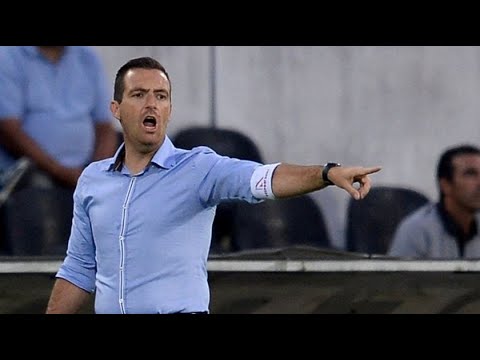
The modern Portuguese football coach is a global commodity, an export often defined by tactical flexibility and a relentless pursuit of opportunity. Few embody this international mandate better than Ricardo Chéu. The 44-year-old manager, currently steering Al-Jabalain in Saudi Arabia, recently stepped into the Liga Portugal spotlight to offer an unvarnished account of his career trajectory during the exclusive podcast, “Sem Filtros” (Without Filters).
The conversation provided a rare look behind the tactical whiteboard, revealing the strict technical ambition required to sustain a career that spans multiple continents, alongside the significant personal concessions such that a journey demands.
The Unforgotten Anchor: A Return to the Top Flight
While Chéu`s passport collects stamps from a diverse array of footballing nations, his professional roots remain firmly planted in Viseu. The coach spoke with marked sincerity regarding his foundational club, Académico Viseu, recognizing its crucial role in launching his professional management career.
“I will be eternally grateful to Académico; it was the club that gave me the opportunity to reach the professional championships. It is a club that marked me,” Chéu stated, before revealing a highly specific, high-level goal: the ambition to eventually return and manage Académico Viseu, not in the lower tiers, but within the elite competition of the Liga Portugal Betclic.
This declared aspiration provides a structural anchor for a career otherwise characterized by relentless motion. For coaches operating on the international merry-go-round, defining a high-stakes, domestic objective often serves as both a driving motivation and a quality control standard. The path to achieving this goal, however, has necessitated accepting assignments far beyond the comfort zone of European management.
Navigating the International Lattice: A Technical Study in Adaptability
Chéu’s CV reads less like a traditional career path and more like a detailed itinerary of global footballing challenges. His readiness to assimilate into diverse sporting cultures demonstrates the technical adaptability characteristic of successful itinerant managers. His appointments have included:
- Slovakia: Dual stints with FK Senica and Spartak Trnava, navigating the rigors of Central European football.
- Cyprus: Managing Doxa, where he tackled the tactical demands of Mediterranean leagues.
- Angola: A crucial period with Petro de Luanda, exposing him to the specific administrative and sporting dynamics of African football.
- Saudi Arabia: His current post at Al-Jabalain, where he must contend with the rapid investment and evolving tactical landscapes of Middle Eastern football.
The successful transition between such varied environments requires more than simple tactical knowledge; it demands socio-cultural intelligence and the capacity for immediate operational setup—a technical skill set that is rarely taught in coaching badges but is essential for survival in the global circuit.
The Cost of the Mission: The Filtered Truth
The “Sem Filtros” format encourages honest reflection, and Chéu delivered on this premise by addressing the often-ignored side of high-level international mobility: the required personal sacrifice. While the rewards of managing top-tier clubs across the world are substantial, the price is measured in distance from home.
When asked to detail the largest sacrifice of his highly international career, the response was direct and universally relatable to any professional whose work necessitates prolonged exile:
“Giving up watching my daughters grow up. However, I have the support of a very strong family that supports me greatly,” he admitted.
This statement underscores a fundamental operational reality of the global coaching profession. Success demands not only technical expertise and constant relocation but also the systematic deprioritization of domestic life. The strong family structure Chéu noted is not merely emotional support; it is a critical piece of technical infrastructure, allowing the manager to maintain focus on the job thousands of miles away. Without such robust support, the high-pressure, globally dispersed career model would be unsustainable.
Ricardo Chéu’s appearance offers a comprehensive view of the professional life of a globally active Portuguese coach: ambitious, highly mobile, technically proficient, and acutely aware that every professional advancement is necessarily tethered to a substantial personal cost.