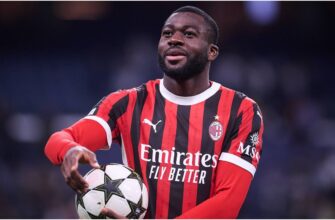
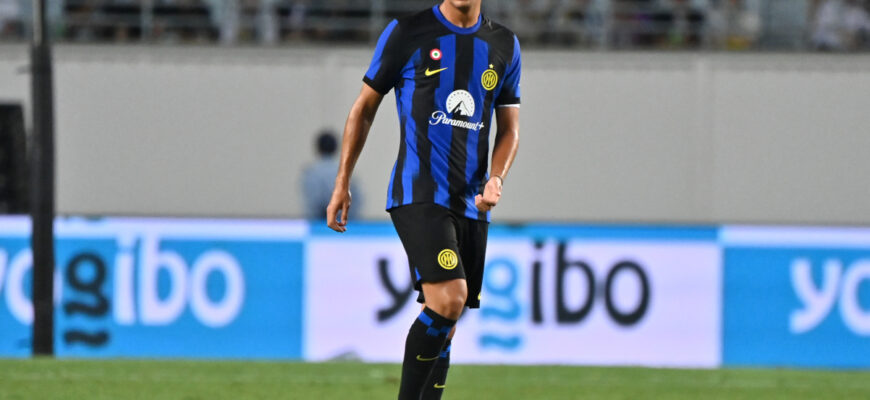
In the complex world of professional football transfers, negotiations often extend far beyond a simple purchase price. The current discussions surrounding young talent Aleksandar Stankovic, involving Italian giants Inter Milan and Belgian club Club Brugge, perfectly illustrate this intricate dance. While an overall transfer agreement of €10 million for the Inter youth academy product is reportedly in place, a crucial €5 million difference over a buy-back clause has brought proceedings to a grinding halt.
The Art of the Buy-Back: A Strategic Stalemate
At the heart of this transatlantic standoff lies the buy-back clause – a mechanism increasingly favored by top clubs to retain a degree of control over promising young players they might temporarily offload. Inter Milan, keen to safeguard their investment and potential future star, proposes a buy-back option set at €25 million, valid until June 2027. This signifies a clear intent: allow Stankovic to develop abroad, but reserve the right to bring him back if he flourishes, at a predetermined, albeit significant, cost.
Club Brugge, on the other hand, views the situation through a different lens. Their proposition for the clause stands at €30 million, and crucially, they wish for it to be valid only until the end of the current campaign. This difference of €5 million might seem minor in the grand scheme of football`s financial dealings, but it represents a fundamental disagreement on the long-term valuation and control of a player who has yet to fully break into senior football at the highest level. For Brugge, a shorter, higher clause offers them more immediate financial leverage should Stankovic`s value skyrocket, without the prolonged shadow of Inter`s potential recapture.
Valuing Potential: More Than Just Numbers
Aleksandar Stankovic, set to turn 20 next month, carries not only his own burgeoning talent but also the considerable legacy of his father, Dejan Stankovic, an Inter legend. This adds an emotional, albeit indirect, dimension to the negotiation. For Inter, retaining a future option on a player with such a lineage might hold sentimental as well as strategic value. It`s a calculated gamble on a prospect, where the future return on investment is speculative but potentially immense.
Stankovic`s recent loan spell with FC Luzern in Switzerland, coupled with reported interest from Bundesliga clubs VfB Stuttgart and VfL Wolfsburg, underscores his perceived potential. These external interests further validate Inter`s desire to maintain a financial leash and Brugge`s push for a more favorable clause. Both clubs are effectively betting on the player`s development curve, trying to secure the most advantageous position for what could be a significant asset in the coming years.
The Broader Implications for Youth Development
This particular negotiation highlights a broader trend in European football: how clubs manage the transition of promising youth players. Instead of simply selling a talent outright and losing all future stake, buy-back clauses provide a safety net. For the selling club, it`s a way to recoup initial investment and potentially a significant profit later. For the buying club, it`s an opportunity to acquire a young talent who might otherwise be out of reach, albeit with the understanding that a successful development could lead to their eventual departure, albeit at a handsome profit.
The current impasse over Stankovic`s clause is a testament to the strategic importance clubs place on these agreements. It`s not merely a transaction; it`s a future-proofing exercise, a game of chess played with multi-million Euro pieces and the careers of young athletes. As the debate continues, the resolution will not only determine Aleksandar Stankovic`s immediate future but also potentially set a precedent for how such talents are valued and controlled in the dynamic landscape of international football transfers.