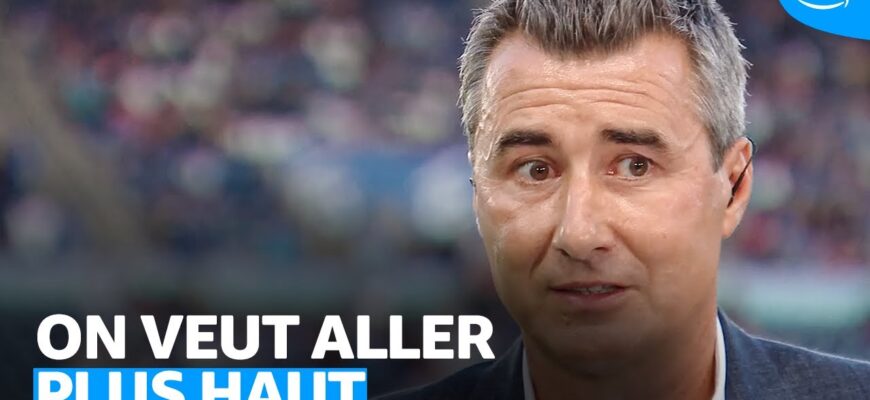
In the often-unpredictable world of professional football, triumphs are usually met with unqualified cheers, not internal conflict. Yet, for RC Strasbourg Alsace, a recent 1-0 victory over Le Havre ignited a different kind of storm, one that saw head coach Liam Rosenior openly challenge a segment of the club’s passionate supporters. This unusual post-win scenario quickly prompted a decisive intervention from Strasbourg president Marc Keller, who unequivocally backed his coach and called for a renewed sense of unity within the Ligue 1 club.
A President`s Prerogative: Unwavering Support for the Helm
Stepping into the fray, Strasbourg president Marc Keller swiftly and decisively threw his weight behind Rosenior. His defense was not merely a gesture of solidarity; it was a clear articulation of the club`s core values and strategic direction. Keller lauded Rosenior’s candor, calling his comments “superb,” and highlighting the Englishman’s deep integration into the Strasbourg project, despite his linguistic background. It seems a common language for loyalty transcends mere vocabulary.
Indeed, Rosenior`s commitment to RCSA is undeniable. The president underscored that the coach had spurned advances from significant clubs both domestically and abroad, choosing instead to extend his contract and further entrench himself in Strasbourg`s ambitions. This dedication, Keller asserted, is precisely what defines the caliber of individuals the club seeks – those who prioritize the project over fleeting opportunities. In an era of managerial merry-go-rounds, such loyalty is a rare, and often underappreciated, commodity.
Drawing the “Red Line”: When Passion Crosses the Mark
The controversy itself revolved around a “very small minority” of fans, whose actions, according to Keller, “crossed the red line.” While the precise nature of these actions remains somewhat veiled, the president`s distinction was crucial: legitimate criticism concerning on-pitch performance – a missed goal, a dip in the league table – is acceptable. After all, what is football without the occasional exasperated sigh from the stands? However, certain expressions of dissent, particularly those that undermine team morale or club unity, are not.
Keller’s message was unequivocal: the club, RC Strasbourg Alsace, transcends any single individual, faction, or temporary grievance. It is a collective entity demanding collective allegiance. “If we are not behind the club, it is better not to come,” he declared, a stark yet necessary reminder of the fundamental, albeit unwritten, contract between supporters and their team. This isn`t just about winning or losing; it`s about the very spirit of the institution and the shared goal of success.
Unity in Diversity: The Path Forward for Strasbourg
In an era where fan groups wield significant influence, and social media amplifies every murmur of discontent, Keller’s firm stance is a testament to strong leadership. It reflects a belief that while passion is the lifeblood of football, it must be channeled constructively. The paradox of a coach facing criticism from his own fanbase *after* securing a vital win highlights the complex emotional landscape of professional sport. Yet, it is precisely in these moments that a club`s identity is forged, and its true priorities are revealed.
For Strasbourg, the path forward is clear: a united front, unwavering support for its players and coach, and a shared vision for the future. President Keller’s intervention serves not only as a robust defense of his coach but as a powerful reaffirmation of what it truly means to be part of the Strasbourg family. It`s a call for the collective, a reminder that the roar of the crowd is most potent when it speaks with one voice, especially when the team needs it most.