
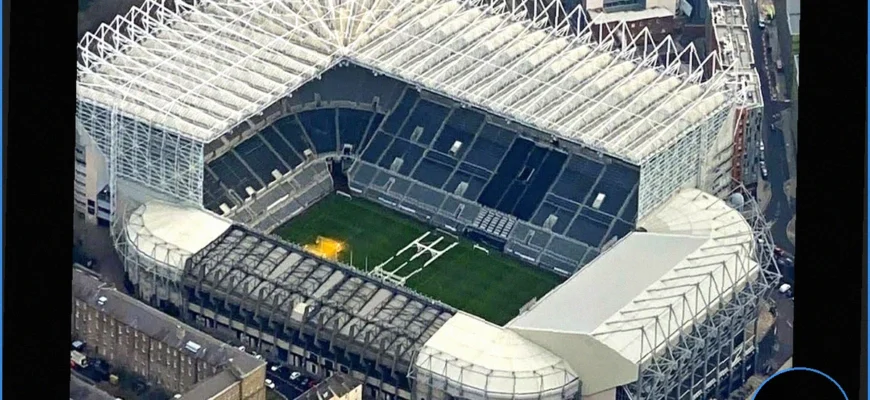
Situated in the vibrant core of Newcastle upon Tyne, St James’ Park transcends the definition of a mere football stadium; it embodies passion, heritage, and unwavering tradition. Since 1892, this emblematic venue has served as the cherished home of Newcastle United, observing countless generations of supporters experience triumphs, heartbreaks, and everything in between alongside their beloved team. Its profound history and electrifying ambiance cement its status as one of the Premier League’s most renowned grounds and a truly memorable destination for visiting fans.
Humble Beginnings and Evolution
St James’ Park first opened its gates in 1880, initially hosting both football and rugby fixtures. Its significance soared in 1892 when it was designated the permanent home of Newcastle United, following the merger of Newcastle East End and Newcastle West End. During its nascent years, the stadium was unpretentious, featuring basic amenities and limited spectator capacity, yet it rapidly blossomed into a central hub for the city’s football fervent.
Throughout the subsequent decades, St James’ Park experienced numerous upgrades, paralleling the club’s expansion and the escalating nationwide interest in football. The 20th century saw substantial enhancements, including the construction of new stands, upgraded terracing, and the installation of floodlights, transforming it into a formidable arena capable of accommodating tens of thousands. This continuous development truly reflected Newcastle United’s ascent as a prominent force in English football.
Distinctive Architecture and Contemporary Enhancements
A defining characteristic of St James’ Park lies in its prime urban placement and striking architectural blueprint. Nestled in the heart of Newcastle, the stadium provides magnificent panoramic views of the urban landscape, notably featuring the iconic Tyne Bridge. The playing field is entirely enclosed by stands, fostering an intense yet intimate environment that amplifies the deafening power of the crowd’s cheer.
Significant modernization efforts during the 1990s and early 2000s propelled the stadium into the contemporary Premier League era. The development of the Milburn Stand and the Sir John Hall Stand expanded its capacity beyond 52,000, positioning it among England’s largest club stadiums. These comprehensive enhancements encompassed superior seating, luxurious hospitality suites, and cutting-edge facilities for both players and spectators.
The Unforgettable “Geordie Roar”
Renowned globally for the fervour of its supporters, affectionately known as the “Geordie faithful,” St James’ Park pulsates with an unmatched energy. The unified chants, songs, and unyielding backing from the crowd coalesce into what is famously dubbed the “Geordie roar” – an overwhelming auditory experience intrinsically linked to the stadium. This potent crowd energy reaches its zenith during crucial fixtures, often unsettling rival teams while simultaneously galvanizing Newcastle’s own players.
Matchdays at St James’ Park transcend mere sporting fixtures; they are deep-rooted cultural festivals. The surrounding avenues, traditional pubs, and local eateries brim with fans, cultivating a lively pre-match buzz that has become an integral facet of the stadium’s character. The fusion of passionate supporters and remarkable architectural design transforms St James’ Park from a simple venue into an unforgettable immersive experience.
Historic Moments and Legendary Encounters
St James’ Park has served as the theatre for innumerable indelible moments throughout its history. From pivotal Premier League confrontations to nail-biting cup finals, the stadium has been a spectator to displays of exceptional skill, unwavering resilience, and profound emotion. Legendary figures like Alan Shearer, Kevin Keegan, and more recently, Bruno Guimarães, have graced its hallowed turf, indelibly inscribing their legacies into the club’s illustrious narrative.
A particularly cherished era was Newcastle’s thrilling domestic renaissance in the 1990s under manager Kevin Keegan, during which the stadium consistently reached full capacity. The sheer intensity of the fanbase, coupled with an exhilarating brand of attacking football, forged memories that supporters continue to fondly recall to this day.
Cultural Importance and Community Reach
Beyond its primary role in football, St James’ Park occupies a profound position within Newcastle’s cultural fabric. It operates as a vital community nexus, facilitating events, guided tours, and various initiatives that strengthen the bond between the club and its local populace. Its very existence fuels local pride and bolsters the economy, drawing visitors from around the world eager to experience the enchantment of a Premier League matchday.
Moreover, the stadium intrinsically mirrors the very essence of Newcastle United: embodying steadfast resilience, fervent passion, and an indomitable spirit. For its dedicated supporters, St James’ Park transcends its physical form of concrete and steel; it stands as a vibrant, living emblem of their deep-seated connection to both the club and their cherished city.
Conclusion: An Everlasting Landmark
St James’ Park firmly establishes itself as one of English football’s most emblematic stadiums, masterfully blending a storied past, impressive architectural grandeur, and an unrivaled matchday ambiance. Its progression from a humble 19th-century pitch to a formidable modern Premier League stronghold perfectly parallels Newcastle United’s growth into a globally recognized footballing entity.
The true essence that distinguishes St James’ Park is the steadfast loyalty of its supporters, whose fervent energy elevates every single match into an unforgettable spectacle. For the loyal “Geordie faithful” and football enthusiasts across the globe, the stadium is far more than merely a venue to observe a game – it is Newcastle’s pulsing heart, a sacred ground where history, passion, and communal spirit coalesce to forge something genuinely magnificent.
Whether one is a devoted lifelong follower or a newcomer experiencing the legendary roar for the very first time, St James’ Park delivers an experience that lingers long after the final whistle, far surpassing the ninety minutes of play.