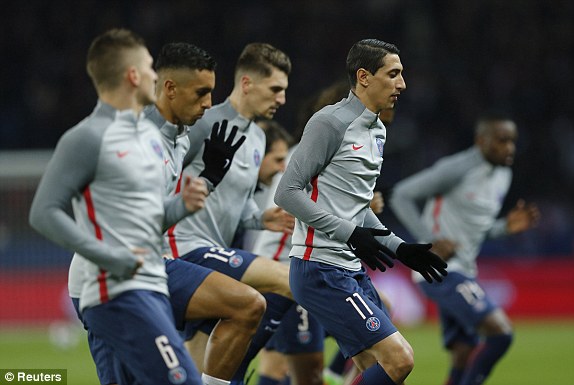
A recent international break has once again ignited the perennial `club versus country` debate, with French football giants Paris Saint-Germain (PSG) taking a remarkably firm stance against the French Football Association (FFF). The club`s ire stems from what they deem “serious and avoidable” injuries sustained by two key players, Ousmane Dembélé and Désiré Doué, while on national duty. This incident not only sidelines valuable talent but also casts a harsh spotlight on the current medical coordination protocols – or lack thereof – between elite clubs and national teams.
The Unfortunate Incidents: Two Strikers, Two Setbacks
The core of PSG`s grievance traces back to France’s 2-0 away victory over Ukraine, a match crucial for their 2026 World Cup qualification campaign. During this fixture, two of PSG’s dynamic forwards, Dembélé and Doué, suffered injuries that will now keep them off the pitch for significant periods. For a club with high aspirations across multiple competitions, these setbacks are far more than mere inconveniences; they are strategic disadvantages.
- Désiré Doué: The former Rennes Academy product, who started on the right wing, was forced to withdraw at half-time. Diagnosed with a right calf strain, Doué is now expected to miss approximately four weeks of action.
- Ousmane Dembélé: Replacing Doué at half-time, Dembélé`s stint on the field was also cut short. He has been sidelined for at least six weeks with a “severe right hamstring injury.” This is a particularly bitter pill for PSG, given Dembélé`s recent return to form.
The timing, as always in professional football, is impeccably inconvenient, disrupting squad rotations and tactical plans just as the domestic and European seasons intensify.
PSG`s Pre-Emptive Warning: Ignored Medical Intelligence?
What elevates this situation beyond a routine injury complaint is PSG`s assertion that these injuries were, in fact, avoidable. According to the club`s official statement, PSG had proactively sent a detailed letter to the French FA prior to the international break. This correspondence reportedly included “concrete medical data on the bearable workload and the risks of injuries of its players.”
One might assume that “concrete medical data” from a top-tier club`s extensive medical department would command a certain level of attention from a national federation. Apparently, that assumption was a touch optimistic in this instance, as PSG contends their valuable input was entirely disregarded by France`s medical staff.
This claim suggests a breakdown in communication and a potential oversight that directly contributed to the current predicament. It paints a picture where the meticulous data collection and player-specific insights from club medical teams are, at times, treated as less than paramount by national setups, despite shared interests in player well-being.
The Wider Implications: A Call for Unified Protocols
PSG`s condemnation extends beyond a simple accusation of negligence. The club is actively advocating for a fundamental shift in how clubs and national teams collaborate. Their statement explicitly calls for the implementation of a new coordination protocol, one that unequivocally places “players’ health and their medical support an absolute priority.”
This isn`t merely about PSG`s immediate roster issues; it`s a broader appeal to rectify a long-standing tension within international football. Clubs invest heavily in player development, transfers, and salaries, only to see their assets potentially compromised during international windows under what they perceive as inadequate or uncoordinated medical oversight. The lack of consultation and collaboration, as lamented by PSG, highlights a systemic issue that impacts not just French football, but the global game.
Why Player Welfare Matters So Much:
- Performance Impact: Injured players cannot contribute, directly affecting club and national team performance.
- Financial Burden: High-earning players on the sidelines represent significant financial losses for clubs without any on-field return.
- Career Longevity: Repeated or poorly managed injuries can shorten a player`s career, a tragic outcome for athletes and a loss for the sport.
- Ethical Responsibility: There`s a moral imperative to protect the health of professional athletes who are, after all, human beings first.
Moving Forward: A Demand for “Swift and Immediate Corrective Action”
PSG concludes its strongly worded statement by demanding that these “serious and avoidable” incidents necessitate “swift and immediate corrective action.” This isn`t a request; it`s a firm expectation for change. The club`s stance serves as a potent reminder that while national pride and qualification campaigns are vital, they should never come at the undue expense of player health and club investment.
The ball is now, figuratively, in the French FA`s court. How they respond to PSG`s forceful, data-backed complaint will set a precedent not just for future international breaks involving French players, but potentially for how football federations worldwide approach the critical balance between national aspirations and the intricate, often fragile, health of their most valuable assets.