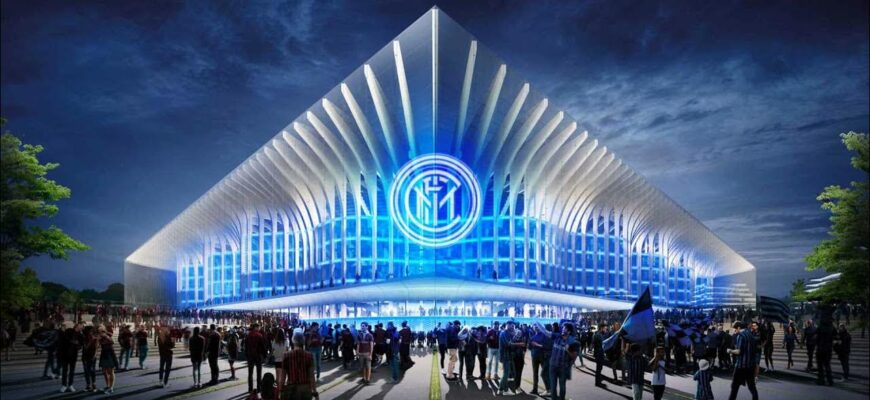
Milan, the global capital of fashion and design, is set to add another jewel to its crown – a state-of-the-art football stadium poised to redefine the European sporting landscape. After years of deliberation and architectural dreams, AC Milan and Inter Milan have solidified their commitment to construct what Milan President Paolo Scaroni boldly declares will be “the best stadium in Europe.” This ambitious €1 billion-plus endeavor aims for completion by 2031, just in time to co-host the UEFA Euro 2032 tournament, promising a future where Milanese football shines brighter than ever.
A New Era for Milanese Football: Beyond the Legendary San Siro
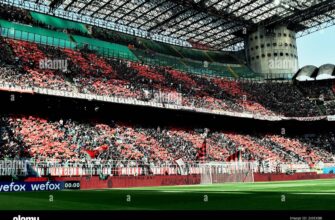
For decades, the Stadio Giuseppe Meazza, affectionately known worldwide as San Siro, has stood as a monumental testament to footballing glory. Its hallowed turf has witnessed countless triumphs, heartbreaks, and the roaring passions of two of Europe`s most decorated clubs. Yet, even legends must evolve. The recent agreement by AC Milan and Inter to jointly acquire the San Siro area from the Milan City Council marks a definitive step towards a new chapter. This strategic move, reportedly costing the clubs an estimated €197 million for the land, signals a profound commitment to modernity and future-proofing their extensive operations.
The rationale is straightforward, if sometimes difficult for purists to accept: while steeped in history, the current San Siro, with its aging infrastructure, presents significant limitations. These include challenges in generating substantial matchday revenue, providing a truly modern fan experience, and meeting the ever-advancing standards required for top-tier international sports venues. A new stadium, therefore, is not merely about a cosmetic facelift; it`s about engineering a sustainable economic engine for both clubs, ensuring they remain competitive at the pinnacle of European football, both on and off the pitch.
What Defines `The Best Stadium in Europe`?
Paolo Scaroni`s audacious claim, “the best stadium in Europe,” naturally begs the question: what exactly will distinguish this new Milanese arena from its continental peers? Beyond the sheer scale of the investment—with over €1 billion to be jointly invested by the rival clubs—the vision encompasses several critical dimensions:
- Technological Prowess: Expect nothing less than cutting-edge digital integration. This will range from interactive fan experiences and high-speed connectivity to advanced broadcast capabilities and smart infrastructure designed to optimize everything from security protocols to concession sales and crowd management.
- Unwavering Sustainability: Modern stadiums are increasingly beacons of eco-consciousness. The new Milan venue is highly anticipated to incorporate state-of-the-art sustainable practices, including renewable energy sources, sophisticated water recycling systems, and the predominant use of environmentally friendly building materials, all aiming for a minimal ecological footprint.
- Unparalleled Fan Comfort and Accessibility: Superior seating comfort, optimal sightlines from every vantage point, and a diverse range of enhanced hospitality suites will be standard. Furthermore, robust transport links and seamless accessibility features will ensure an unparalleled experience for every attendee, regardless of their needs.
- Versatile Multi-purpose Design: To maximize utility and revenue streams, the stadium will undoubtedly be engineered to host a wide array of events beyond traditional football matches. This includes major concerts, international conferences, and other significant sporting spectacles, making it a year-round destination.
- Architectural Iconography: Just as the existing San Siro is an instantly recognizable global landmark, the new design will aspire to be a contemporary icon – a bold, forward-thinking symbol of Milanese ingenuity and its enduring passion for sport.
The precise details regarding the final design, and more poignantly, the fate of the existing San Siro, are still subject to further announcements. However, the likelihood of partial or even entire demolition of the Stadio Meazza, while perhaps a pang of regret for staunch traditionalists, underscores the unwavering commitment to a truly fresh and uncompromised start.
The Bureaucratic Gauntlet and a Shared Vision
Embarking on a project of this colossal magnitude in Italy, particularly one involving historically significant sites and multiple public and private stakeholders, is notoriously complex. The recent approval from the Milan City Council, however, represents a significant bureaucratic hurdle successfully cleared, finally allowing both clubs to advance with concrete planning and execution. It stands as a profound testament to a shared vision, even between such fiercely competitive rivals as AC Milan and Inter, acknowledging that the future prosperity and global standing of Milanese football hinges critically on this joint venture. One might even find a certain poetic irony in these two giants, so often locked in eternal sporting combat, uniting their formidable resources for a common architectural destiny.
The stringent 2031 deadline, largely propelled by Milan`s aspiration to serve as a prominent host city for the UEFA Euro 2032 tournament, adds a vital, tangible target. This international spotlight provides a perfect global stage to showcase a stadium that genuinely aims to set new benchmarks in modern sports infrastructure.
Economic Ripple Effects and Future Aspirations
The economic ripple effects of such a colossal project extend far beyond the immediate interests of the clubs themselves. The extensive construction phase alone is projected to generate a significant number of jobs, while the operational stadium will subsequently sustain a robust local economy through increased tourism, enhanced hospitality services, and a wide array of related businesses. For AC Milan and Inter, a state-of-the-art modern stadium guarantees significantly increased matchday revenues and diverse commercial opportunities, factors that are absolutely crucial for competing effectively with Europe`s established financial powerhouses in the transfer market and beyond.
Ultimately, this project is far more than just steel, glass, and concrete; it`s a powerful statement of intent. It unequivocally signifies Milan`s unwavering ambition to remain at the pinnacle of European football, not merely through on-pitch triumphs and star players, but also through possessing world-class, future-ready infrastructure. While the revered ghosts of San Siro will undoubtedly linger in collective memory for generations to come, the promise of this new stadium offers a vibrant, dynamic future – a magnificent place where new legends will undoubtedly be forged, and the entire “Milanese” populace will once again have a truly modern cathedral of which to be immensely proud.