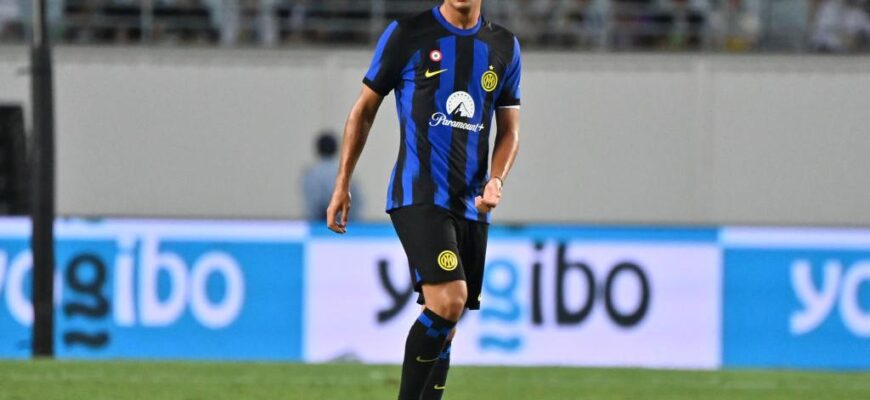
In the intricate world of professional football, where financial prudence often collides with sporting ambition, clubs continually seek innovative strategies to manage talent and capital. A recent agreement involving Inter Milan and Club Brugge concerning midfielder Aleksandar Stankovic offers a prime example of such strategic maneuvering, revealing a deal designed to secure immediate financial gain while retaining significant future control over a promising asset.
The Deal`s Core Mechanics: A Deep Dive into the Numbers
After weeks of negotiation, Inter Milan and Club Brugge have finally settled on the terms for Aleksandar Stankovic`s transfer. The initial agreement sees the Serbian midfielder move to the Belgian club for a fee of €10 million. This outright sale provides Inter with immediate liquidity, a welcome injection for a club often navigating the tightrope of Financial Fair Play regulations and significant investment needs.
However, the narrative does not conclude with a simple sale. The true ingenuity of this deal lies in the meticulously crafted buy-back clause. Inter has secured the right to repurchase Stankovic for €22 million in 2026, a figure that incrementally rises to €25 million by the summer of 2027. This is a crucial distinction, as original discussions reportedly saw Club Brugge pushing for a minimum buy-back value of €28 million, coupled with a much shorter expiration period of just one year. Inter`s negotiation team, it seems, demonstrated considerable acumen in securing more favorable terms.
Inter`s Shrewd Gambit: A Blend of Business and Sporting Vision
From Inter`s perspective, this transaction is less about letting a talent go and more about a calculated deployment of resources. By selling Stankovic now, they realize a substantial immediate gain. Yet, the buy-back clause acts as an insurance policy and a strategic future option. It allows Stankovic, who turns 20 next week, to gain invaluable first-team experience and develop his skills in a competitive European league without blocking immediate roster spots at Inter.
Should Stankovic flourish at Club Brugge, becoming the midfield general many anticipate, Inter holds the golden ticket to bring him back at a pre-determined, and arguably discounted, price. In an era where player valuations can skyrocket unpredictably, securing a future option at a known cost is a genuinely clever move. It`s akin to investing in a promising start-up, allowing it to grow independently, but reserving the right to acquire it fully once its value is proven—and perhaps, critically, before it becomes prohibitively expensive.
“In football, the best deals aren`t always about who you buy, but how you manage those you cultivate. Inter`s approach with Stankovic embodies a patient, long-term vision in a notoriously impatient industry.”
Club Brugge`s Calculated Risk: Investing in Potential
For Club Brugge, acquiring Stankovic for €10 million represents a significant investment in a young player with high potential. They gain a talented midfielder, who last season was on loan at FC Luzern in Switzerland, suggesting a player already accustomed to European football beyond his native academy. Club Brugge`s objective will be to provide Stankovic with the platform and playing time necessary for him to reach his full potential. If he excels, he will undoubtedly contribute significantly to their sporting objectives during his tenure.
The existence of the buy-back clause does temper Club Brugge`s ultimate ownership, but it doesn`t diminish the immediate value. They are effectively acquiring a top-tier prospect with the chance to benefit from his peak development years, knowing that if he truly explodes onto the scene, a larger club (in this case, his original club) might exercise its option. Even then, Brugge will have profited from his performances and potentially from the initial €10 million investment, assuming Inter`s repurchase covers more than just the original fee.
The Legacy Continues: Aleksandar and the Stankovic Name
Adding a layer of intrigue to this transfer is Aleksandar`s lineage. He is the son of none other than former Inter star Dejan Stankovic, a legendary figure who graced the San Siro midfield for many years. This familial connection undoubtedly places a unique spotlight on Aleksandar, carrying both the weight of expectation and the benefit of inherent club affinity. Growing up within the Nerazzurri academy, he has been immersed in the club`s culture and tactical philosophy.
The question now shifts from “will he make it?” to “when will he return?” His time at Club Brugge will be a crucial period of maturation, allowing him to step out of his father`s considerable shadow and forge his own identity on the pitch. Should he develop as Inter hopes, his return to Milan would be more than just a transfer; it would be the continuation of a legacy, a narrative arc that football fans often relish.
What Lies Ahead?
The Stankovic transfer epitomizes the sophisticated financial engineering prevalent in modern football. It`s a testament to Inter Milan`s strategy of balancing immediate financial needs with the long-term cultivation of talent. For Aleksandar Stankovic, it`s a pivotal career step, offering the prime environment for growth before a potential triumphant return to the club where his family name is synonymous with greatness. Only time will tell if this calculated gamble pays off for all parties involved, but one thing is certain: the eyes of the football world, particularly those in Milan, will be watching his progress closely.