In the ongoing debate over the finest Souls game, Dark Souls 2 often claims my top spot, despite its imperfections. I appreciate its ambitious scope and innovative elements, such as the Bonfire Ascetic system and optional boss strategies, alongside its profound melancholic atmosphere. However, it’s Dark Souls 3, celebrating its 10th anniversary today, that I find myself consistently revisiting. Thus, it feels appropriate to commemorate this significant milestone.
Naturally, the original Dark Souls is undeniably a classic, celebrated for its superior world design, rich lore, immersive ambience, iconic bosses, and unforgettable set pieces. Yet, its noticeable rough edges and age make it challenging for me to reconnect with it after 15 years. In stark contrast, Dark Souls 3, despite launching only five years later, has remarkably stood the test of time, feeling as fresh today as it did on release.
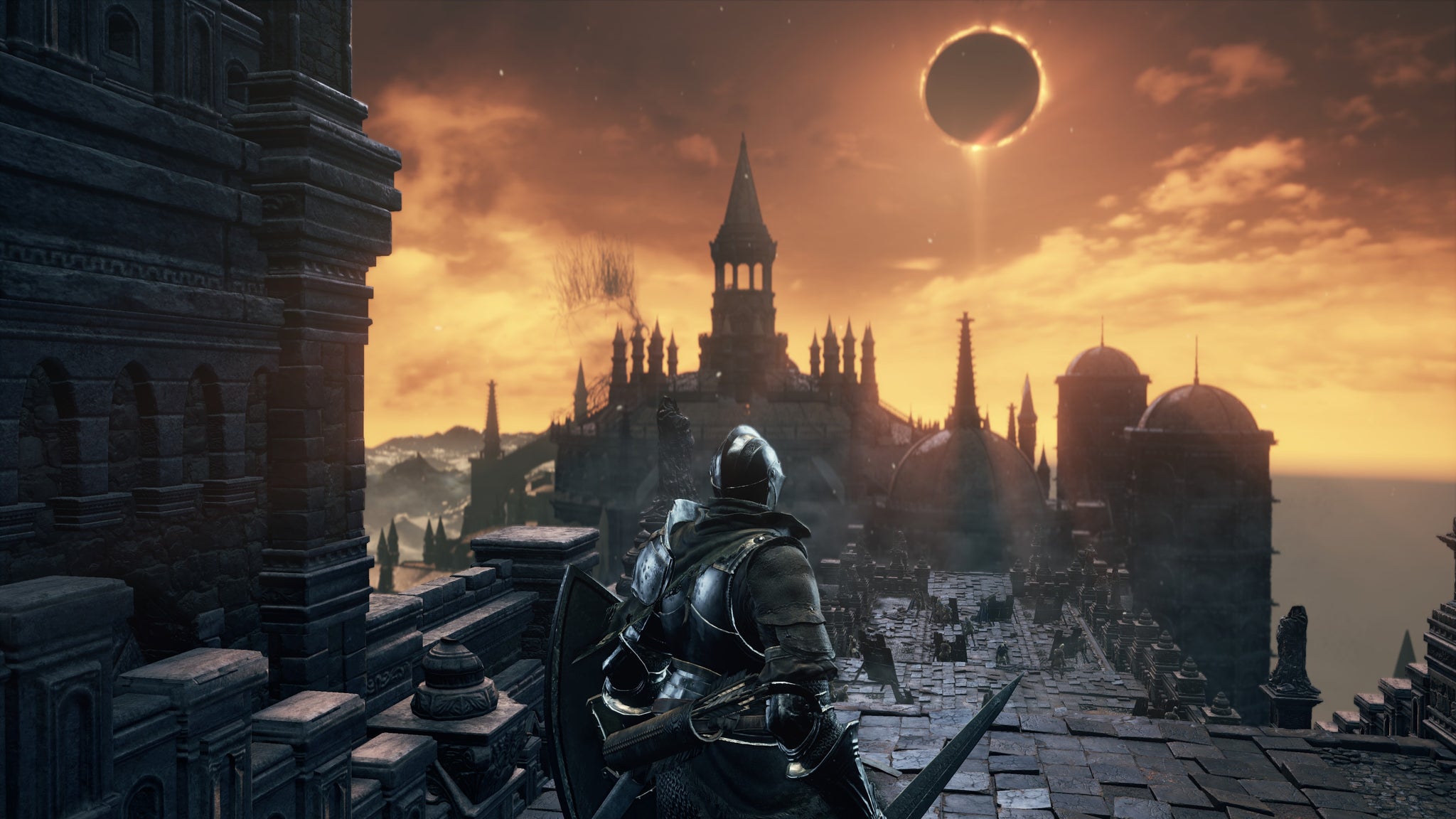
A key factor in its enduring appeal is its visual fidelity. Dark Souls 3 seamlessly integrates FromSoftware’s leap into high-definition graphics (first showcased in Bloodborne) with their unparalleled mastery of intricate world design. Every detail, from fallen stones to grim skyboxes and enemy placements in Lothric, contributes to an overwhelming sense of history and place. This is particularly impressive given Lothric’s somewhat unconventional, linear arrangement of self-contained areas, which the narrative ingeniously explains as places and times converging at the world’s end. It’s also intriguing to consider the game’s dramatic late-development changes, which reveal an earlier, geographically more coherent vision for Lothric.
Despite its predominantly linear structure and somewhat fragmented lore, Dark Souls 3 effectively overcomes these aspects. Lothric’s individual locations — crumbling battlements, ramshackle villages, overgrown graveyards, broken bridges, and towering cathedrals, all overshadowed by the omnipresent Castle Lothric and bathed in a decaying sun — are exquisitely crafted. They consistently demonstrate FromSoftware’s exceptional level design skills. While Lothric as a whole might lean linear, these looping, interconnected environmental marvels offer distinct challenges and remain a joy to explore.
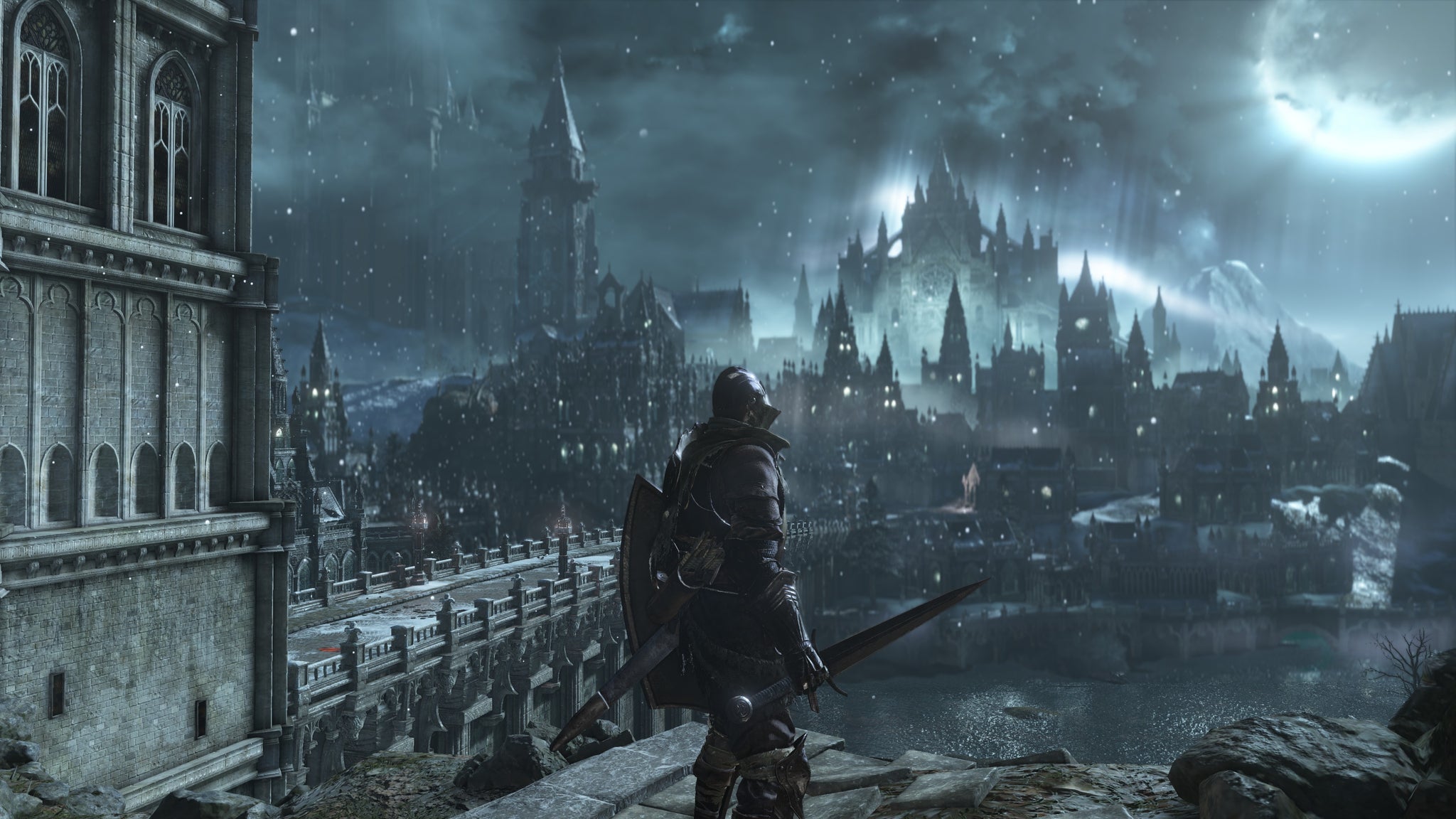
The Cathedral of the Deep stands out as arguably the game’s initial truly memorable setting, an opulent, spiraling design featuring classic FromSoftware challenges like treacherous buttress battles and confined giant encounters. Elsewhere, Farron Keep’s decaying, poisonous woods evoke a sense of distress and disorientation. Later, Ithryll Dungeon plunges players into oppressive horror, drawing them deeper into the past and closer to the Profaned Capital. The Grand Archive, equally elaborate, guides players through an impressively complex path, with cavernous interiors unexpectedly opening to vast, apocalyptic panoramas.
The game’s DLC content (with the exception of the less engaging Dreg Heap) is equally captivating. It begins with the expansive snowfields of Ariandel and culminates in The Ringed City, one of the Souls series’ most visually stunning locations. This DLC also serves as a brilliant conclusion to the entire series, revisiting one of its most enigmatic lore elements after numerous Easter eggs along the way. The nod to the iconic character Patches also provides an enjoyable piece of fan service.
Beyond its world, I would argue that Dark Souls 3 boasts the most enjoyable combat system in the series. While I don’t meticulously track hitboxes or i-frames, the combat feels noticeably more fluid and faster-paced, without abandoning the characteristic cautious stop-block-roll mechanics that define the series – it’s certainly distinct from the frenetic pace of Elden Ring. This combat truly shines in its exceptional boss battles. Excluding the Crystal Sage, which I find particularly uninspired, I genuinely believe there are no truly bad boss encounters here. Even divisive ones like the Deacons of the Deep, with their puzzle-like mechanics, offer a refreshing change of pace. Many bosses represent series high points, offering spectacular visuals and diverse mechanics that consistently challenge players.
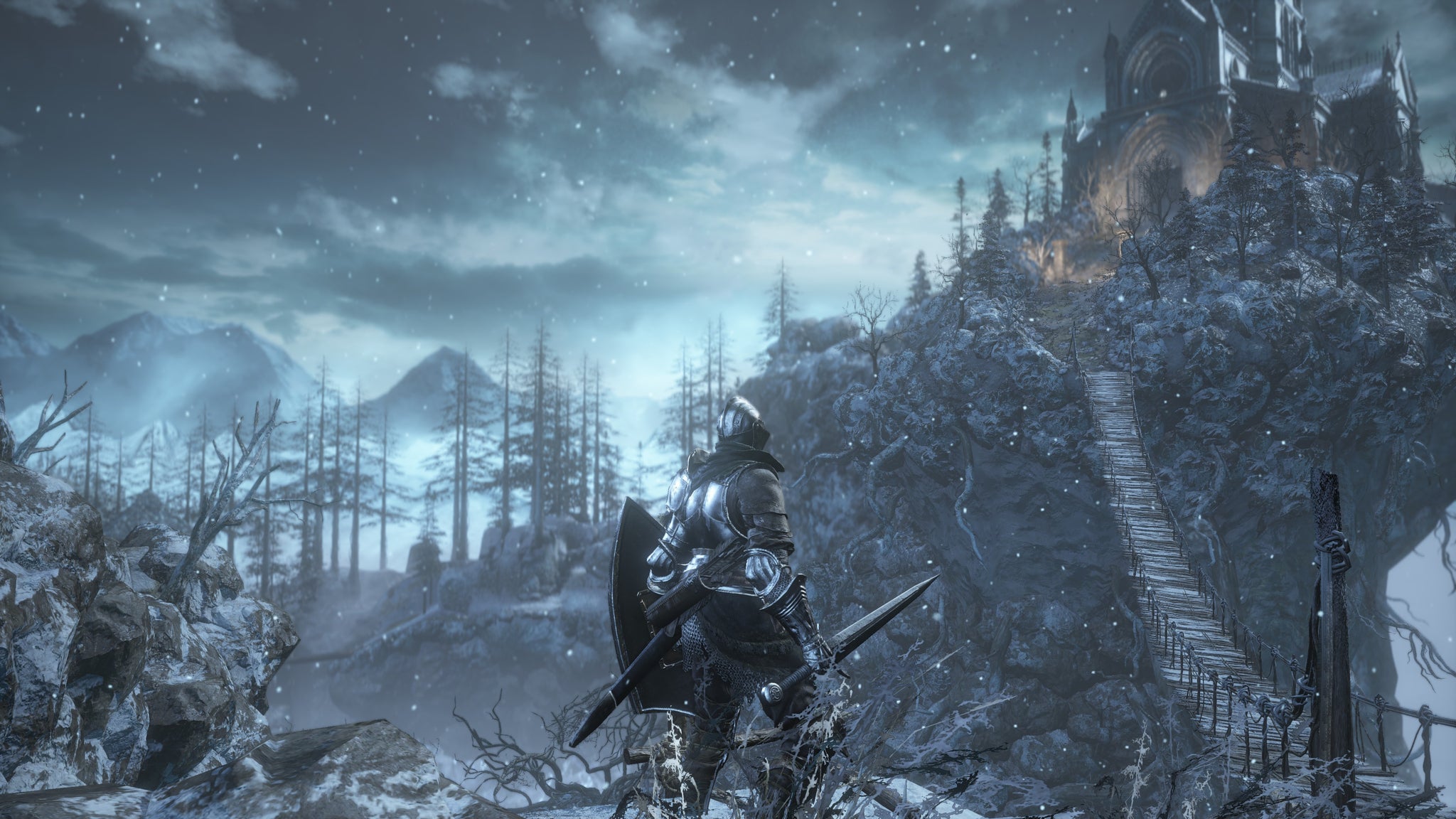
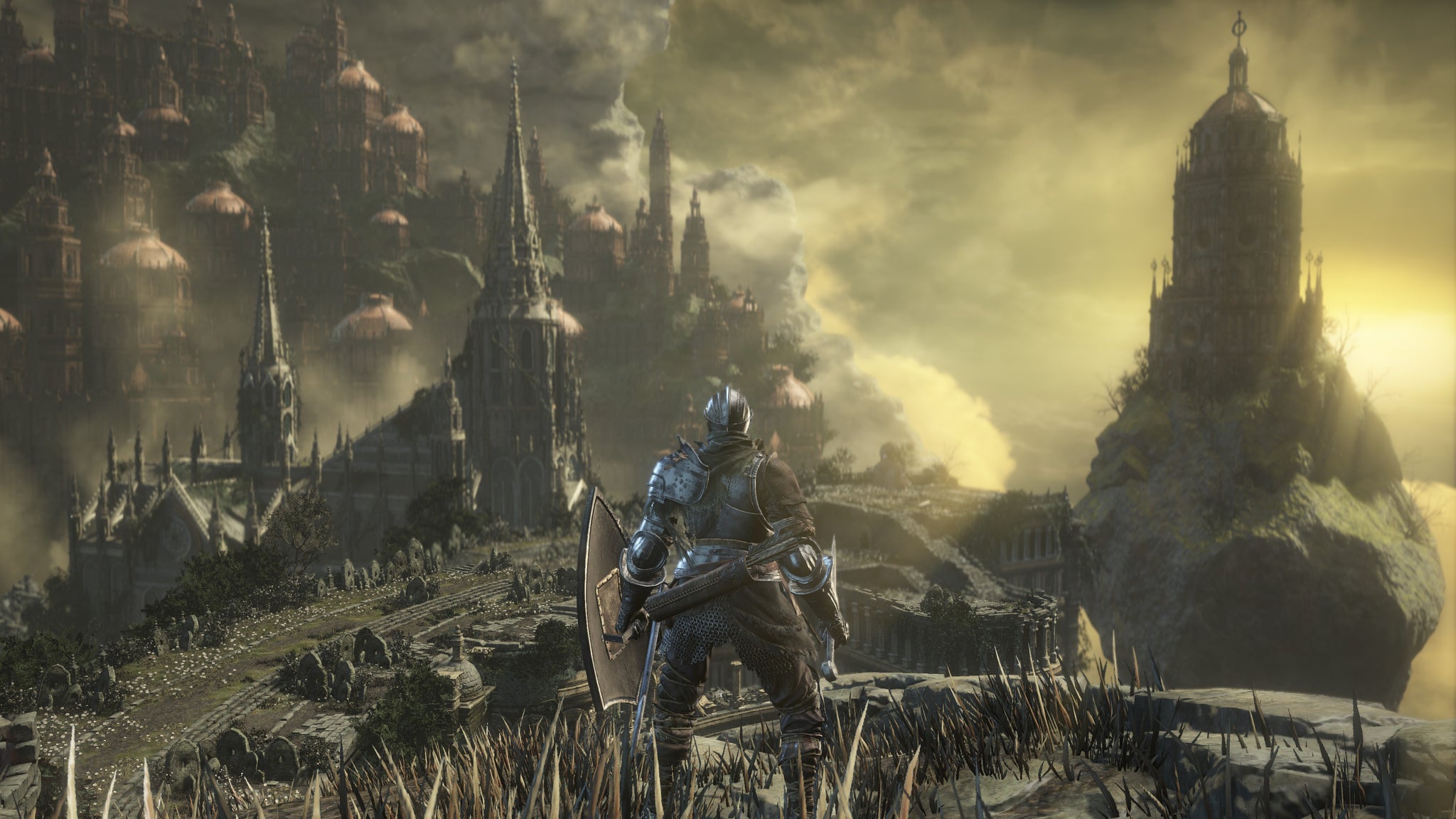
The game is packed with unforgettable boss encounters: the poignant final stand of the Abyss Watchers, fighting among their fallen comrades; the desperate last efforts of the Twin Princes, defending each other to the very end with their frustrating teleportation; Sister Friede’s dazzlingly choreographed multi-phase battle (which nearly defeated me); the pyrotechnic intensity of Pontiff Sulyvahn; and the even grander spectacle of The Nameless King, battling atop his dragon amidst a turbulent storm. There’s also the mesmerizing, confounding rhythm of the ethereal Dancer of the Boreal Valley, the unsettling Oceiros and his (sometimes invisible) child, and the apocalyptic brilliance of Gael. Frankly, I even have a soft spot for that ‘stupid tree’ boss. Cheers to them all, except you, Crystal Sage.
When I last discussed Dark Souls 3 before Elden Ring’s launch, I described it as ‘an exercise in refinement, showcasing FromSoftware at its peak, pushing the boundaries of the traditional Soulsborne formula with brilliant craftsmanship and invention.’ This assessment remains valid today. While four years later, I might concede that Shadow of the Erdtree’s boss quality likely surpasses Dark Souls 3’s (and I’d even argue its Land of Shadow represents From’s best world design, though that’s a topic for another day), Dark Souls 3’s beautifully doomed world of Lothric continues to draw me back repeatedly. My personal favorite in the trilogy often shifts; one day it’s Dark Souls 3, the next it might be Lordran or Drangleic calling to me again.
As Dark Souls 3 marks its tenth year, perhaps it’s the entire glorious series we should celebrate. After all, where the flame is concerned, the beginning is the end is the beginning again. And that is an endless cycle in which I am content to remain trapped.