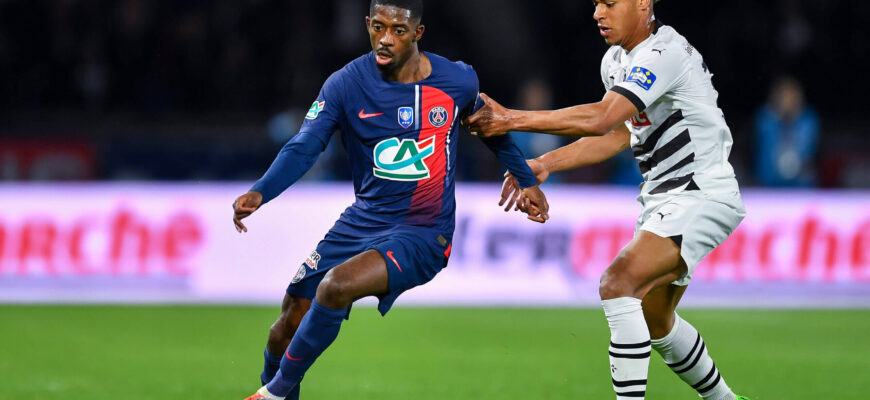
The latest international break has once again brought to the forefront a perennial issue in elite football: player injuries. This time, the French national team finds itself grappling with the early departure of two key players, Ousmane Dembélé and Désiré Doué, casting a shadow over their recent victory and reigniting the debate surrounding player welfare and the intense demands of the modern game.
A Costly Victory Against Ukraine
Friday night`s 2-0 triumph over Ukraine in Poland, while securing valuable points, came at a significant physical cost for Didier Deschamps` squad. The match saw Paris Saint-Germain`s prodigious talent, Désiré Doué, exit the field at half-time, suffering a calf injury that forced his substitution. His replacement was none other than his clubmate, Ousmane Dembélé.
Dembélé, a player whose career has been punctuated by unfortunate spells on the sidelines, was himself returning from a hamstring injury sustained just the previous weekend. In a cruel twist of fate, the forward succumbed to another hamstring issue – thankfully, not the same one – forcing his withdrawal in the 80th minute. Both players were reportedly seen hobbling out of the stadium in Wroclaw, painting a stark picture of their immediate future.
PSG`s Frustration: A Recurring Nightmare
The immediate fallout from these injuries extends beyond the French national team. For Paris Saint-Germain, the news is particularly unwelcome. Reports from France suggest the club is “furious” with the national team`s handling of Dembélé, in particular. This sentiment is entirely understandable. Elite clubs invest astronomical sums in player acquisition, salaries, and medical support, only to see their assets potentially compromised during international duty.
The cycle is familiar: players arrive at national team camps, often following a grueling club schedule, participate in high-intensity matches, and occasionally return to their clubs either injured or physically drained. For a club like PSG, aiming for domestic dominance and European glory, the absence of key offensive players like Dembélé and Doué, even for short periods, can have significant repercussions on their carefully planned season.
The Relentless Pace of Modern Football: A Deeper Dive
These incidents are not isolated; they are symptomatic of a larger systemic challenge facing professional football. The modern calendar is increasingly congested, with domestic leagues, cup competitions, continental tournaments, and international breaks all vying for prime dates. Players are expected to maintain peak physical condition year-round, performing at the highest level every few days.
- Physical Demands: The game itself has evolved. Players cover more ground at higher intensities than ever before. The physical output required is immense, pushing the human body to its limits.
- Recovery Time: Adequate recovery is crucial for injury prevention. With frequent matches and extensive travel, particularly during international breaks that see players crisscross continents, optimal recovery protocols are often compromised.
- Club vs. Country Mandate: FIFA regulations often mandate clubs to release players for international duty. While national pride and international competition are vital, this contractual obligation can create friction when player welfare appears to be at risk. Clubs are left feeling powerless when their most valuable players get injured outside their direct control.
Didier Deschamps` Dilemma: Balancing Ambition and Caution
National team coaches, like Didier Deschamps, face an unenviable task. They must select their strongest squads to achieve national objectives, often within limited windows of opportunity. This necessitates calling upon top-tier players, who are invariably the ones with the most demanding club schedules. Deschamps himself expressed pessimism about Dembélé and Doué`s chances for the upcoming match against Iceland, acknowledging the immediate impact of their injuries.
The decision to play Dembélé, who had just recovered from a previous hamstring issue, highlights the delicate balance. Was it a calculated risk? Or perhaps an unavoidable consequence of needing a player of his calibre on the pitch? The answer likely lies in the grey area between competitive ambition and medical advice, a terrain that becomes increasingly challenging to navigate with each passing season.
Looking Ahead: A Call for Dialogue and Sustainable Solutions
As Dembélé and Doué undergo tests, the wider implications for both France`s Euro qualifying campaign and PSG`s domestic and European aspirations loom large. More importantly, these incidents serve as another stark reminder of the urgent need for ongoing dialogue between clubs, national federations, and governing bodies.
The conversation must move beyond finger-pointing and focus on sustainable solutions for player welfare. This could involve:
- Re-evaluating the international match calendar to reduce player load.
- Implementing stricter guidelines for player monitoring and management during national team camps.
- Fostering greater collaboration and transparency between club and national team medical staffs.
Ultimately, the health and longevity of these athletes are paramount. Without them, the spectacle of football loses its brilliance. The Dembélé and Doué injuries are not just headlines; they are potent symbols of a systemic pressure that demands collective attention and thoughtful, long-term remedies to ensure the beautiful game remains just that.