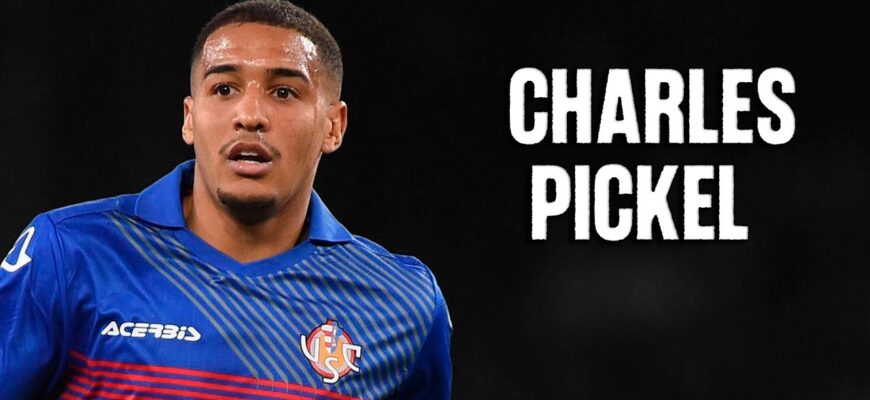
The life of a professional footballer often involves managing two distinct realities: the urgent demands of international duty and the persistent contractual dynamics of the home club. For Charles Pickel, the RCD Espanyol midfielder currently representing the Democratic Republic of Congo (DR Congo) in the Africa Cup of Nations (AFCON), this dual existence has become a finely balanced tightrope walk, particularly regarding his future in Barcelona.
While Pickel’s international team advances in Africa, his contract situation back in Spain has reached a definitive, if complicated, conclusion. The fine print of his loan-to-buy agreement means that one chapter of his career trajectory at Espanyol is officially closing, even as the possibility of a new, negotiated chapter remains open.
The Paradox of the Unused Success
Pickel was successfully called up for the DR Congo national squad participating in AFCON. The Leopards have performed admirably, putting themselves on the verge of qualification for the knockout stages. Following a solid 1-0 victory in the opening match, the Congolese side secured a crucial 1-1 draw against the formidable Senegal, accumulating four points and placing themselves well ahead of the group’s final fixture.
Yet, despite the team`s success, Pickel has remained a spectator. He has not played a single minute across the two crucial fixtures. While sitting on the bench during a successful international campaign might be frustrating for the player, for Espanyol, this period of inactivity ironically carries profound financial and strategic implications, determined by a strict contractual metric.
The Cruel Calculus of the Contract Clause
Pickel originally signed a deal with Espanyol that included a common, yet demanding, automatic renewal clause. This clause was designed to convert his temporary stay into a longer commitment, contingent upon a specific threshold of game time. To trigger the automatic extension for a second season, Pickel needed to participate in **28 matches, each totaling at least 45 minutes of play**.
In modern football, such clauses are intended to ensure that a club commits only to players who become genuinely integral to the first-team setup. However, they introduce a stringent, mathematical layer of fate entirely separate from managerial preference or the player`s potential.
The Mathematical Inevitability of Non-Renewal
For Pickel, the equation simply failed to balance. As it stands, the midfielder has only crossed the critical 45-minute mark in just four matches (two in the league and two in the Copa del Rey). Even considering the most optimistic scenario—that Espanyol plays every remaining match this season and Pickel participates in all of them, starting now—he would only reach a maximum of 25 appearances exceeding 45 minutes.
The automatic renewal clause requiring 28 matches played for a minimum of 45 minutes each is now mathematically impossible to meet. The countdown has officially stopped three games short of the target.
This failure to reach the arbitrary number of 28 means the automatic mechanism for his contract extension has been deactivated. The decision regarding his continuation is now firmly placed back onto the negotiation table, necessitating a manual, “pacted” agreement between the player and the club’s sporting management.
Utility Trumps Metrics: A Path to Negotiated Continuity
The situation is not a doom-and-gloom scenario for Pickel’s presence at the club. Despite accumulating only around 500 minutes across 12 total appearances, Espanyol’s coach, Manolo González, has publicly valued the midfielder`s versatility and commitment. Pickel has been deployed in various roles, adapting seamlessly from a deep-lying central midfielder to more advanced positions, even functioning occasionally as a secondary forward. This adaptability is a valuable asset, particularly in the demanding environment of the Spanish second tier.
The fact that the automatic renewal has failed simply means that Espanyol now holds more leverage in setting the terms of a new agreement. Crucially, Pickel himself reportedly does not oppose remaining with the Blanquiazules beyond June, provided the appropriate terms can be established. This willingness to commit, irrespective of the contractual disappointment, signals a positive level of engagement and professionalism.
In summary, Charles Pickel’s immediate fate is divorced from his team’s success in Africa. The contract’s technical requirements have not been met, forcing Espanyol to transition from an automated acquisition to a deliberate negotiation. The question remains whether the demonstrable utility Pickel offers, despite his low minute count, is enough to warrant a new, manually crafted commitment from the club`s hierarchy.