In the high-stakes world of professional football, transfer windows often unfold as a complex ballet of financial negotiation, strategic positioning, and, increasingly, player ambition. While vast sums of money frequently dominate headlines, the narrative surrounding Lyon`s promising attacker, Malick Fofana, offers a compelling counterpoint: not every move is dictated solely by the highest bid. For Fofana, the allure of Europe`s premier club competition, the UEFA Champions League, appears to outweigh even the most substantial financial proposals from clubs outside its elite circle.
The Young Talent with Lofty Goals
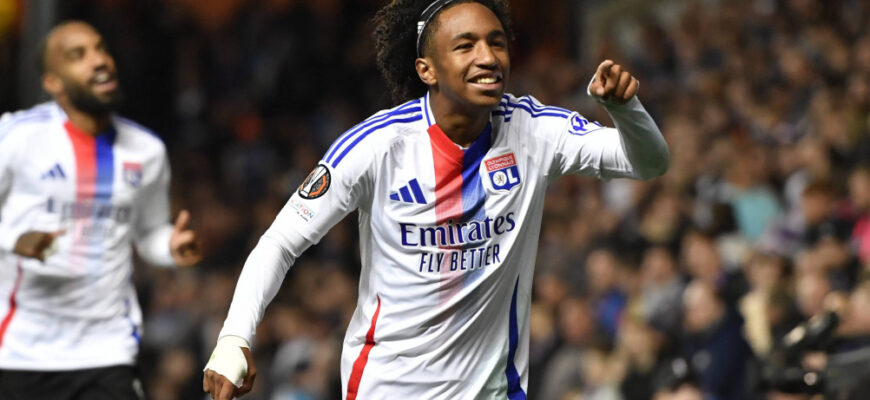
Malick Fofana, a 20-year-old Belgian international, has quickly emerged as a player of considerable potential. His performances for Olympique Lyonnais have evidently attracted significant attention across Europe, particularly from the English Premier League. However, Fofana`s career trajectory is clearly marked by an unwavering desire to compete at the very highest level. This ambition is not merely a whisper; it`s the driving force behind his current transfer stance.
Spurning Premier League Millions for European Glory
The most prominent suitor to date has been Everton, a club with a rich history and considerable financial backing in the Premier League. Reports indicate that Everton entered into serious negotiations with Lyon, tabling an initial offer in the region of €36 million, a sum that, including performance-related bonuses, could have approached €40 million. Lyon, for their part, maintained a firm valuation, seeking a fixed initial fee of €40 million.
Despite the substantial nature of this bid – a figure that would represent a significant investment for any club – Fofana`s response has been clear: a polite, yet firm, refusal. His priority is unequivocally a move to a club participating in the Champions League. This commitment to his sporting aspirations has seen him also reject approaches from Nottingham Forest, another Premier League side keen on securing his services.
The Strategic Waiting Game
Fofana`s stance has created an intriguing dynamic in the transfer market. While top-tier Champions League clubs are reportedly interested, including European heavyweights like Bayern Munich and Liverpool, they are not yet making concrete moves. This delay is often a calculated strategy: elite clubs frequently need to create squad space, offload existing players, or rebalance their financial books before making major new acquisitions. For Fofana, this translates into a period of watchful waiting, a test of patience as he holds out for his preferred destination.
It`s a testament to the growing agency of modern footballers. Where once players might have felt compelled to accept the most lucrative offer, the landscape has shifted. For a player of Fofana`s age, with his entire career ahead of him, the immediate financial gain, while significant, might be seen as secondary to the long-term career benefits and prestige associated with playing in the Champions League. After all, showcasing talent on Europe`s grandest stage can lead to greater visibility, higher future earnings, and, critically, a stronger legacy.
The Broader Implications for Transfer Dynamics
Fofana`s situation encapsulates a broader trend in European football transfers. It highlights:
- Player Power: The increasing influence of individual players in determining their next move, often prioritizing sporting ambition over pure financial incentive.
- The Champions League Premium: The immense value placed on Champions League participation, not just for club finances and prestige, but also for attracting and retaining top talent. Clubs without it face an uphill battle in securing elite players.
- The Art of Negotiation: The intricate dance between selling club (Lyon demanding their valuation), buying clubs (Everton`s rejected bid, CL clubs` strategic delay), and the player`s personal objectives.
What Lies Ahead?
As the transfer window progresses, all eyes will be on Malick Fofana. Will a Champions League club make the room, and the offer, necessary to secure his services? Or will his unwavering ambition prove a challenging obstacle, perhaps forcing a reconsideration, or a patient wait for a future window? His decision will not only shape his career but also serve as a compelling case study in the evolving interplay of money, ambition, and opportunity in the global football market. For now, Malick Fofana continues to bet on himself, and on the magnetic pull of the Champions League anthem.