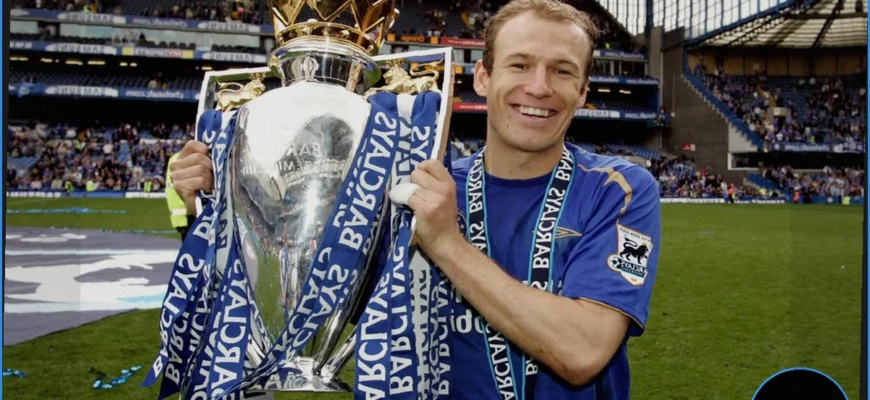
Arjen Robben joined Chelsea in 2004, arriving with a reputation as one of Europe’s most promising young wingers. The Dutch sensation, acquired from PSV Eindhoven, injected explosive speed, incisive dribbling, and an audacious attacking flair perfectly aligned with José Mourinho’s ambitious Chelsea squad. Yet, his introduction to the Premier League didn’t unfold as anticipated.
Delayed Start and Personal Challenge
Robben’s initial foray into English football was hampered by an injury. A broken metatarsal suffered during a pre-season friendly sidelined him for the initial months of the 2004–05 season. He finally made his competitive appearance on 23 October 2004 against Blackburn Rovers, signaling the commencement of what would prove to be a highly influential, albeit injury-prone, tenure.
During his recovery, Robben encountered a significant personal health scare. He discovered an unusual growth, prompting Chelsea’s medical team to act quickly and perform tests for testicular cancer. Thankfully, he received a clean bill of health, enabling him to fully concentrate on his comeback to the sport.
Instant Success in the 2004–05 Season
Upon regaining fitness, Robben swiftly made his mark in the Premier League. His displays towards the end of 2004 were electrifying, culminating in the Premier League Player of the Month award for November. Primarily deployed on the left flank, he introduced a dynamic new attacking threat for Chelsea, exploiting defenses with his speed and incisive runs to both create and convert scoring opportunities.
Despite limited appearances, Robben concluded the 2004–05 season with a respectable seven goals. Crucially, he was instrumental in guiding Chelsea to their inaugural league title in half a century. His significant impact was widely acknowledged, leading to a nomination for the PFA Young Player of the Year award, an accolade eventually claimed by Wayne Rooney.
Nevertheless, further injuries soon interrupted his progress. A severe injury sustained against Blackburn Rovers forced him to miss vital matches, including the League Cup final, the decisive phase of the title race, and Chelsea’s push to the Champions League semi-finals.
Sustained Influence and Consecutive League Triumphs
The 2005–06 campaign marked Robben’s return to full fitness, solidifying his status as a pivotal attacking player for Chelsea. While not always assured a starting spot due to squad rotation and fierce competition, his presence on the pitch consistently proved highly impactful.
Across 28 league matches, Robben netted six goals, frequently unsettling opposing defenders with his straightforward yet devastating approach. Chelsea subsequently secured their second consecutive Premier League title, a historic first for the club. Robben’s contribution to preserving attacking width and introducing unpredictability was an essential element of Mourinho’s tactical framework.
2006–07: Flashes of Brilliance Amidst Injury Woes
Robben’s concluding season at Stamford Bridge in 2006–07 perfectly illustrated his inherent talent alongside his persistent battle with injuries. When available, he consistently proved to be a decisive player. A memorable display occurred in December 2006 against Wigan Athletic, where he delivered two assists and scored the crucial winning goal, earning him the man-of-the-match award.
Despite this, injuries relentlessly hampered his consistency. A setback incurred against Liverpool in January 2007 forced him out of action once more, and even after his return in February, additional complications arose. Nevertheless, Robben still managed to deliver in critical junctures.
Among his most significant contributions was in the League Cup final against Arsenal. Entering as a substitute, he assisted Didier Drogba’s decisive goal, aiding Chelsea in clinching the trophy. Furthermore, he found the net in the Champions League knockout rounds against Porto, emphasizing his capacity to perform in high-stakes matches.
A Challenging Conclusion to His Chelsea Chapter
Later in the season, Robben underwent knee surgery, which severely restricted his participation during the closing period of the campaign. Following his return, he made only a few appearances, notably in the dramatic Champions League semi-final second leg against Liverpool. The game proceeded to a penalty shootout, where Robben’s attempt was saved, leading to Chelsea’s elimination.
His last game for Chelsea was the FA Cup final against Manchester United. Brought on at half-time, he was subsequently substituted during extra time, as Chelsea eventually lifted the trophy. This marked a rather bittersweet conclusion to his tenure in England.
Departure and Lasting Legacy
In the summer of 2007, Robben finalized a transfer to Real Madrid, concluding his three-year period at Chelsea. His exit was abrupt, allowing little opportunity for a formal goodbye, though he later conveyed his appreciation to the supporters and spoke positively about his time with the club.
Throughout his Premier League career, Robben collected every significant domestic trophy, including two league championships, the FA Cup, and the League Cup. Despite the relative brevity of his stay in England, his influence was profound and unquestionable.
A Precursor to Global Stardom
Robben’s journey in the Premier League is frequently viewed as a preview of the immense talent he would fully unleash. While injuries undoubtedly affected his consistency at Chelsea, his raw ability and game-changing prowess were apparent from day one. His displays offered a clear indication of the world-class player he would evolve into, especially during his iconic period at Bayern Munich.
In essence, Robben’s stint at Chelsea embodies both the vast potential and inherent unpredictability of football. At his peak, he was simply unstoppable—a winger capable of single-handedly altering the course of a game. Despite the brevity of his Premier League story, it stands as a crucial and unforgettable segment of his illustrious career.