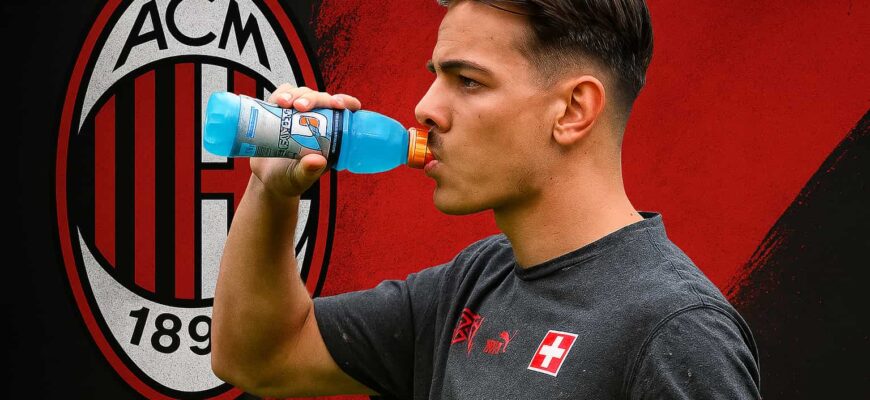
In the high-stakes world of professional football transfers, where financial offers often dictate allegiance, a rather refreshing narrative of unwavering personal ambition is currently unfolding. Swiss midfielder Ardon Jashari stands at the center of a burgeoning transfer saga, seemingly poised to prioritize a childhood dream over the allure of more lucrative propositions.
The Protagonist`s Predicament
Ardon Jashari, a promising talent currently plying his trade with Belgian giants Club Brugge, finds himself in a position that is both enviable and, paradoxically, challenging. AC Milan, a club steeped in European football history, has reportedly tabled an offer of €33.5 million plus add-ons for his services. For many young players, securing a move to such a storied institution would unequivocally represent a career-defining moment, a clear testament to their skill and potential on the global stage.
However, the plot thickens. According to various reports emanating from the football transfer network, the esteemed Rossoneri are far from being the sole suitors. Powerhouses such as English Premier League club Chelsea, German Bundesliga stalwarts Bayer Leverkusen, and even the financially ambitious Saudi Pro League outfit Neom, are understood to have presented more robust and, quite frankly, more financially compelling bids. In a landscape often characterized by the cold, hard calculus of market value and inflated player wages, Jashari`s response has been remarkably consistent: he desires Milan, and reportedly, only Milan.
A Childhood Dream Manifested
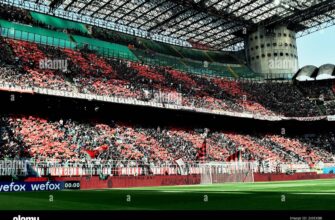
What fuels such resolute devotion in an era where player movement often resembles a high-speed financial chess game, driven primarily by economic incentives? For Jashari, the answer appears to lie in the realm of deep-seated personal affinity and long-held aspirations. Reports indicate a profound, almost romantic connection to AC Milan, a bond reportedly forged in his formative years during a memorable visit to the iconic San Siro stadium, where he witnessed his future potential employers in action.
This isn`t merely a strategic preference or a tactical move in negotiation; it is presented as the culmination of a lifelong aspiration. In a sport increasingly globalized, commercialized, and, some might argue, commoditized, the notion of a player actively spurning higher bids for the sake of a “dream move” resonates deeply with traditional football romantics. It serves as a potent, if somewhat nostalgic, reminder that beneath the layers of multi-million-euro contracts and intricate financial negotiations, there still exists a core passion for the game and for specific clubs that can, on occasion, transcend purely monetary gain.
The Looming Crisis Meeting
Jashari`s conviction has reportedly reached a critical juncture, setting the stage for a potential confrontation. The player`s notable omission from Club Brugge`s squad for their recent season opener served as a clear, albeit unspoken, indicator of the brewing tension between the player and his current club. This weekend, the situation is poised to escalate further as Jashari intends to confront Club Brugge`s hierarchy in what is being widely termed a “crisis meeting.”
His objective, as reported, is unambiguous: to explicitly demand his release to AC Milan. The Milan camp themselves are reportedly confident in the adequacy of their offer, believing the €33.5 million package, combined with add-ons, to be more than equitable. This confidence is reportedly bolstered by claims from Jashari`s representatives, who assert that Club Brugge had previously committed to facilitating a sale should an offer of €32.5 million materialize. This discrepancy, or perhaps a difference in interpretation of a prior understanding, adds another layer of complexity to the negotiation table, highlighting the often-opaque nature of verbal agreements in the transfer market.
Loyalty vs. Leverage in Modern Football
This unfolding saga raises pertinent questions about player agency, club management, and the very essence of loyalty in contemporary professional football. From Club Brugge`s perspective, maximizing the financial return on an asset is, arguably, a sound business practice. Their fiduciary duty is to secure the best possible value for their investment in Jashari, especially when other clubs are willing to pay more. It`s a rational economic decision in a cut-throat industry.
Yet, the human element—the player`s ambition, his deeply held dream, and his evident willingness to forgo significant personal financial gain to achieve it—cannot be entirely discounted. When a player unequivocally states their preferred destination and demonstrates a readiness to make personal sacrifices, it creates a unique form of leverage. It tests the resolve of the selling club: do they risk retaining a potentially unhappy player who might subsequently underperform, or do they honor a perceived commitment and facilitate a move, even if it means leaving a substantial sum of money on the table? This is the delicate balance between commercial imperative and player well-being that modern clubs must navigate.
The Ardon Jashari situation is more than just another fleeting transfer rumor; it is a fascinating and instructive case study in the evolving dynamics of elite football. It challenges the conventional wisdom that every player has a price and every club will invariably choose the highest bidder. As the “crisis meeting” approaches, the football world watches with keen interest to see if, in the often-unromantic business of transfers, romance—or at least a deeply held conviction—can indeed ultimately triumph.