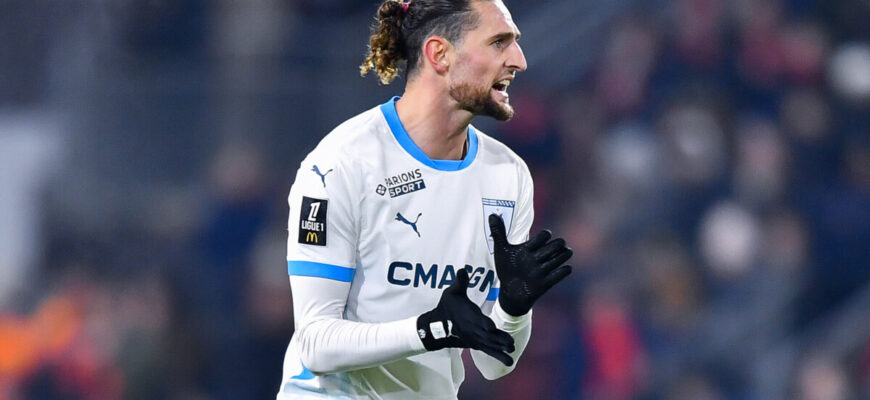
As the transfer window groans towards its inevitable close, a familiar narrative unfolds within the hallowed, if sometimes tumultuous, halls of Olympique de Marseille. The central figure in this latest installment? Adrien Rabiot, a midfielder whose talent is as undeniable as his capacity for generating off-field headlines. His future at OM, a club rarely accused of dullness, hangs precariously, caught between disciplinary infractions, an agent`s strong opinions, and the delicate balancing act performed by coach Roberto De Zerbi.
The Unraveling: From Pitch Altercation to Public Scrutiny
The genesis of this current melodrama can be traced back to an altercation with teammate Jonathan Rowe following a disappointing defeat to Rennes. While such heated moments are not uncommon in the highly charged atmosphere of professional football, the situation escalated dramatically. Rabiot was subsequently placed on the transfer list, a clear signal from president Pablo Longoria and director of football Mehdi Benatia that patience had worn thin. Rowe has since moved on, but Rabiot remains, a lingering question mark over Marseille`s squad harmony.
However, the real accelerant to this bonfire of uncertainties wasn`t merely the on-field spat. It was the public criticism leveled by Rabiot`s mother and agent, Véronique, towards OM`s hierarchy. In modern football, the line between player representation and club relations is often blurred, sometimes deliberately so. Véronique Rabiot’s vocal involvement has consistently added layers of complexity, transforming what might have been a straightforward disciplinary matter into a public relations tightrope walk for the club.
De Zerbi`s Delicate Dance: Coach, Mediator, or Spectator?
Into this charged atmosphere stepped Roberto De Zerbi. Initially, his remarks after a 5-2 victory over Paris FC hinted at a potential reconciliation, suggesting a chance to “repair things” with the France international. This surprising sentiment stood in stark contrast to the firm stance taken by Longoria and Benatia, momentarily casting De Zerbi in the role of the compassionate, perhaps naive, mediator.
Yet, the coach, a veteran of football`s often-unforgiving tactical and personal landscapes, quickly clarified his position. Ahead of OM`s trip to Lyon, De Zerbi succinctly stated:
“This is now between Adrien and the club. It wasn`t against the president or the club. I advised Rabiot to go to the club, to apologise for what happened in Rennes, because things have been amplified by his entourage. If there is humility, perhaps things can be rebuilt. If ego and pride get in the way, then I don`t know.”
This statement, delivered with the precision of a seasoned diplomat, effectively shifted the onus back to Rabiot and the club. It revealed the delicate tightrope a manager must walk: maintaining squad discipline, supporting club policy, and yet, retaining the faint hope of salvaging a valuable asset. The coach, it seems, can only guide the horse to water; drinking remains the horse’s prerogative.
Club Stance vs. Player Agency: A Familiar Impasse
President Longoria also weighed in, attempting to cool speculation regarding his own “open door” comments, insisting they applied to “every player, not only Adrien.” Such clarifications are standard fare in the high-stakes game of transfer negotiations, where every word is dissected, and every utterance can be misconstrued to suit a narrative. The club`s desire to assert control and maintain its authority is clear, particularly when faced with public challenges from a player`s camp.
The situation highlights a recurring theme in contemporary football: the push and pull between a club’s institutional power and the individual agency, often magnified by an influential agent, of a high-value player. Rabiot, with his significant talent and his mother`s forthright approach, embodies this dynamic. Despite an apology for the initial clash, the broader issue of challenging club hierarchy, amplified by his entourage, remains the more significant hurdle.
The Final Days: A Race Against Time
As the clock ticks down on the transfer window, the future of Adrien Rabiot remains stubbornly unresolved. Negotiations with interested clubs are reportedly ongoing, but with limited time, options dwindle, and the pressure mounts. Will a suitor emerge with an offer palatable to both OM and Rabiot`s demanding terms? Or will Rabiot remain in Marseille, potentially training apart from the group, a high-profile ghost in the club`s training facilities?
This saga, in its essence, is a microcosm of modern football`s inherent complexities. It`s a blend of sporting ambition, financial considerations, personal pride, and the often-combative relationship between players, agents, and club management. De Zerbi has wisely stepped back from the direct fray, leaving the resolution to the principal actors. Whether this particular drama concludes with a last-minute exit, a begrudging reintegration, or a prolonged standoff, it serves as a potent reminder that in football, as in life, ego and humility often dictate the final score.