In the often-unpredictable world of professional football, a recent victory on the pitch for Racing Club de Strasbourg Alsace (RCSA) was ironically overshadowed by a burgeoning internal conflict. The catalyst? A decisive stand taken by long-serving club president Marc Keller against a vocal faction of the club`s most fervent supporters, the `ultras` of the West Stand.
The Architect of a Golden Decade Faces Dissent
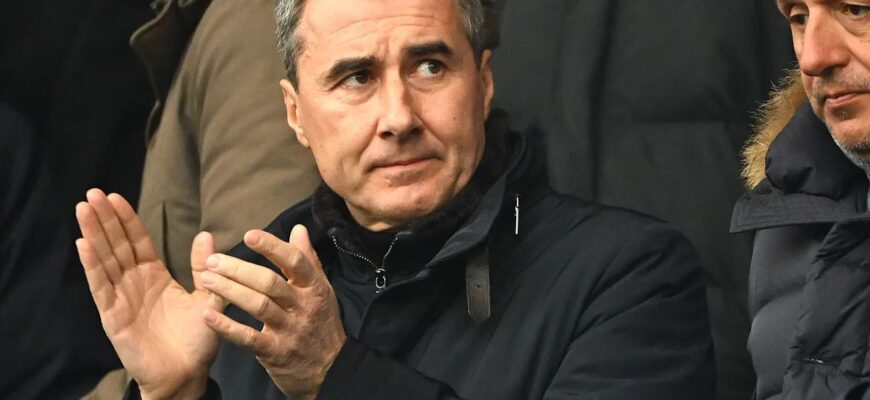
Marc Keller, a figure synonymous with RCSA`s modern resurgence, has guided the Alsatian club since 2012. His tenure has been widely celebrated as a “golden decade,” transforming the club from a period of uncertainty into a respected Ligue 1 entity, even securing a Coupe de la Ligue title. This history of success and perceived unity makes the recent protests all the more jarring.
During a 1-0 win against Le Havre, a match that should have been a moment of collective celebration, a banner unfurled by the West Stand ultras cast a long shadow. It read: “Marc Keller, thank you for this golden decade. It`s time to leave.” The message, ostensibly a backhanded compliment, was accompanied by a statement from fan groups accusing Keller of having “sold the club” to BlueCo – the American consortium also owning Chelsea FC – and, critically, of having relinquished true decision-making power. Further exacerbating the situation was pointed criticism directed at club captain and striker Emmanuel Emegha, a move Keller found particularly egregious.
A Family Betrayed: Keller`s Emotional Response
Keller`s response, delivered in a press conference, conveyed a deep sense of personal hurt and betrayal, rather than mere administrative frustration. He articulated the paradox of a stadium filled with “23,000 people sad, disappointed, and even disgusted despite the win,” citing an outpouring of support from other fans that surpassed even the club`s moments of triumph.
“What happened Sunday is something I could never have imagined. A minority in the West Stand attacked the institution, the project, and our captain. That is unacceptable.”
His sentiment underscored a core value he believes defines RCSA: the club as a family. Keller emphasized the “special relationship” historically shared with the West Stand, a bond forged through thick and thin, even during the club`s spell in the National division. He lamented, however, that this relationship had “changed in the last two years,” culminating in Sunday`s actions which “crossed a line.” The criticism leveled at Emegha, in particular, was described as profoundly painful, starkly contrasting with what Keller considers the club`s inherent values.
Drawing a Line: Measures Imminent
The president`s condemnation was not merely rhetorical. Keller confirmed that immediate and decisive disciplinary action would be taken against the involved ultra groups. Deputy general director Alain Plet elaborated, explaining that the club intends to “reset” its relationship with these supporters, signaling an end to a decade of trust under the previous framework.
The coming measures, described as “evolving” and effective immediately, aim to establish a “new framework.” While specific details remain under wraps, the message is clear: the club will no longer tolerate what it perceives as attacks on its integrity, leadership, or players, regardless of historical allegiance. It`s a calculated risk, as alienating a passionate segment of the fanbase can be fraught with peril, but one Keller evidently feels is necessary to protect the club`s fabric.
The Broader Implications: Navigating Modern Football`s Complexities
This incident at Strasbourg serves as a potent microcosm of the increasingly complex dynamics in modern football. The influx of new ownership, often with significant financial backing like BlueCo, inevitably shifts the landscape, sometimes clashing with entrenched fan cultures that prioritize tradition and local identity over global aspirations or commercial imperatives. For supporters, the notion of their club being “sold” can feel like a profound betrayal, even if it brings new resources. For leadership, navigating these emotional currents while also steering the club through commercial realities is a tightrope walk.
Keller`s firm stance illustrates the perennial tension between a club`s commercial evolution and its grassroots identity. It`s a testament to the passionate, sometimes irrational, nature of football fandom that even a decade of success and a recent win can be insufficient to prevent open revolt when core principles—or perceived slights—are at stake. The coming weeks will reveal whether Keller`s decisive action can indeed reset the relationship or if this `golden decade` will conclude with an unsettling new chapter of division within the RCSA family.