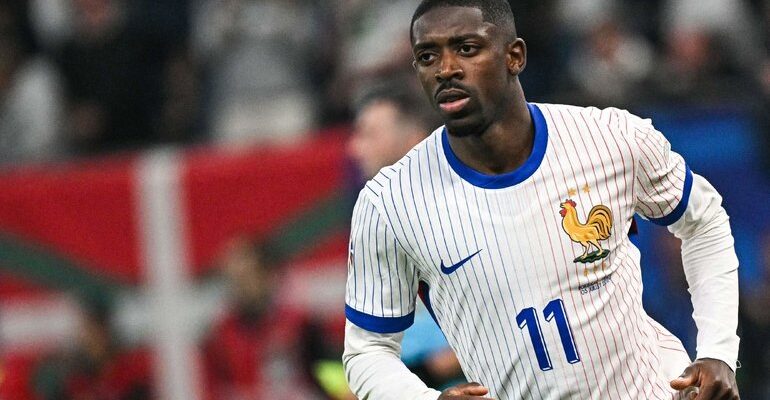
The intricate dance of international football, where national pride meets tactical execution, often comes with an inherent risk: player injury. For French forward Ousmane Dembélé, this reality materialized once again during France`s 2026 World Cup qualifying fixture against Ukraine. What began as a strategic second-half substitution for Didier Deschamps quickly transformed into an unfortunate and premature end to Dembélé`s participation, sending ripples of concern through both the national squad and his club, Paris Saint-Germain.
An Unscripted Departure in Wroclaw
The initial narrative of France`s campaign opener in Wroclaw saw Les Bleus secure a workmanlike 2-0 victory over Ukraine. However, the evening`s lasting impression for Dembélé would be one of personal disappointment. Beginning the match on the bench, a decision that saw Kylian Mbappé deployed in the No. 9 role, Dembélé was thrust into action earlier than planned due to an injury sustained by Désiré Doué. He entered the fray at the start of the second half, taking up his customary position on the right wing.
Just ten minutes before the final whistle, the familiar, unwelcome sight unfolded: Dembélé pulled up sharply, indicating an issue with his right hamstring. For a player often cited as a potential future Ballon d`Or contender, the irony of an injury sustained while coming off the bench can be particularly cruel. His brief return to international duty was thus curtailed, leading to his replacement by Liverpool forward Hugo Ekitike, who consequently earned his senior debut for the French national team under less than celebratory circumstances.
Immediate Consequences: Missing the Icelandic Challenge
The immediate aftermath left little room for speculation. Official reports confirmed Dembélé`s withdrawal from the French squad. This means he will be unavailable for France`s subsequent World Cup qualifier against Iceland, scheduled to take place at Paris` iconic Parc des Princes. For a player striving for consistency and a secure role within Deschamps` formidable setup, missing even a single international fixture represents a significant setback, disrupting rhythm and denying opportunities to contribute.
“The relentless calendar of modern football demands peak physical condition, yet paradoxically, it also increases the likelihood of such setbacks. For Dembélé, this latest injury is a stark reminder of his ongoing battle for sustained fitness.”
The Persistent Challenge: Dembélé and Injury Management
Dembélé`s career, despite moments of breathtaking skill and match-winning contributions, has been frequently punctuated by various injuries. This latest hamstring strain reignites a recurring discussion about player load management, recovery protocols, and the sheer physical demands placed upon elite athletes navigating both demanding club schedules and high-stakes international commitments. For a talent of Dembélé`s caliber, these physical interruptions have often prevented him from achieving prolonged periods of his formidable best.
Didier Deschamps, a manager renowned for his pragmatism and strategic depth, consistently faces the task of managing an embarrassment of riches in the French squad while simultaneously safeguarding player welfare. While the depth of French talent often allows for rotations, repeated injuries to key attacking personnel can nonetheless disrupt tactical plans and necessitate rapid adjustments. This incident underscores that even the most well-stocked national teams are not immune to the unpredictable nature of physical exertion.
Ripple Effects at Club Level: Concerns for Paris Saint-Germain
Beyond the immediate implications for Les Bleus, Dembélé`s injury will undoubtedly generate concern back at Paris Saint-Germain. As a high-profile signing, his fitness is critical to PSG`s aspirations across domestic competitions and, crucially, in the UEFA Champions League. A hamstring injury, depending on its grade, can sideline a player for several weeks, potentially impacting crucial league fixtures and the early stages of European competition. PSG`s medical team will now be focused on a meticulous rehabilitation program, aiming for his full recovery without undue haste, ensuring a robust return to the pitch.
France`s Depth: A Test and an Opportunity
While Dembélé`s absence is an undeniable blow, it simultaneously highlights the extraordinary depth within French football. The immediate elevation of Hugo Ekitike, making his senior debut, is testament to the continuous production line of talent. Deschamps possesses an enviable array of alternative options, from established stars to emerging talents, capable of stepping into the void. This depth, while a significant advantage, also means that every international call-up is intensely competitive, making Dembélé`s enforced break particularly frustrating from a personal standpoint.
Looking Ahead: Recovery and Resilience
Ousmane Dembélé`s withdrawal from the French squad serves as a regrettable, yet familiar, development in his career. As France continues its pursuit of World Cup qualification, they will do so without one of their most electrifying and unpredictable talents for the immediate future. The focus now firmly shifts to his recovery process and the tactical adjustments Deschamps will implement. For Dembélé, the path forward involves dedicated rehabilitation, with the ultimate goal of returning to the pitch not just stronger, but consistently available to showcase his unique abilities for both club and country.